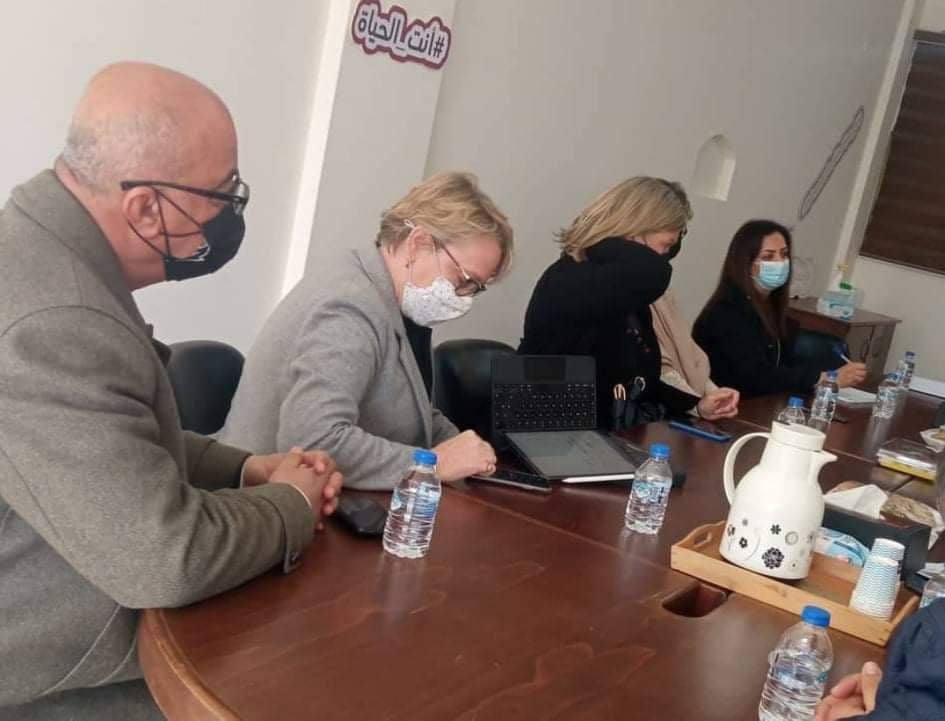
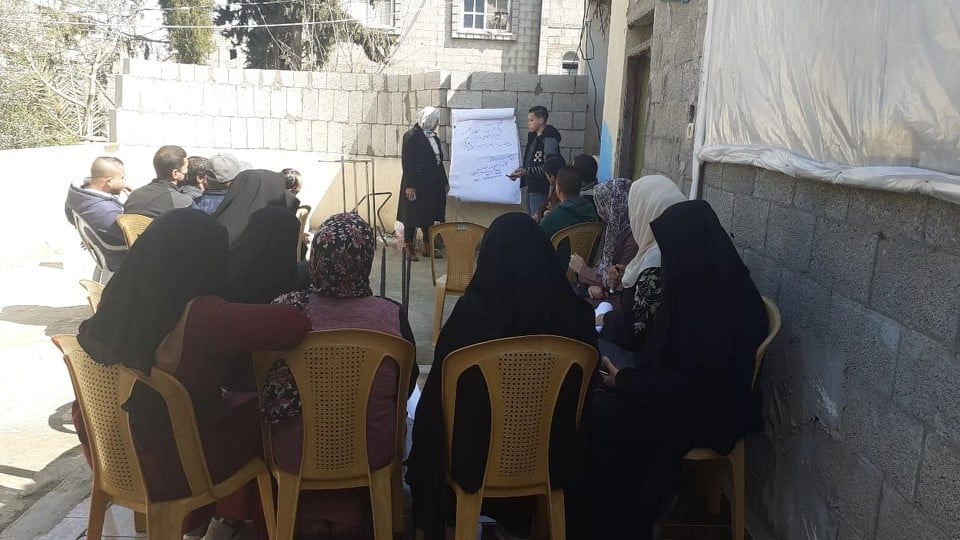
The Center for Women’s Legal Researches, Counselling and Protection (CWLRCP) inaugurated a training program on “The Unified Operational Procedures Manual for Preventing Gender-Based Violence, Protecting Children, and Referral Pathways.” The training aims to enhance the capabilities of staff working on the “Hayat” (Life) project for the protection and empowerment of women and families.
This eight-day training, totaling 40 training hours, is part of the project “A Holistic Approach to Shelter Services for Women Victims and Survivors of Violence in Palestine.” The project is implemented in partnership with UN Women and funded by the Italian Agency for Development Cooperation.
Eleven members of the Hayat project staff, including specialists and lawyers, are participating in the training, in addition to four specialists and lawyers from the project’s partner organization, the Al-Bureij Women’s Health Center.
The training, conducted by specialized trainers, covers several topics, including various Standard Operating Procedures (SOPs), unified work procedures for managing and referring cases of gender-based violence and child protection in the Gaza Strip (prepared by the Norwegian Refugee Council (NRC)), case management based on the Hayat project’s SOP manual for protecting and empowering women and families (which includes the referral system, referral pathways, and writing case management reports), and the training manual for caring for survivors of gender-based violence prepared by the Aisha Association for Woman and Child Protection.
Ms. Zeinab Al-Ghunaimi, Director of the CWLRCP, opened the training by welcoming the trainees and trainers. She introduced the various SOPs, including an overview of the Hayat project, a presentation on previous training received by the staff, and lessons learned from the specialists’ field work.