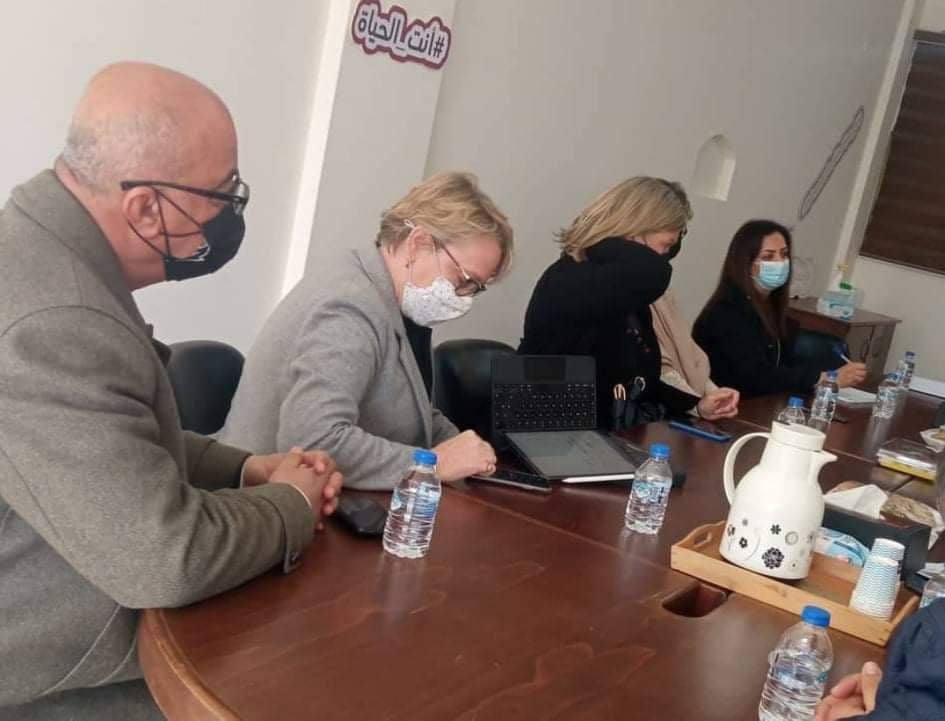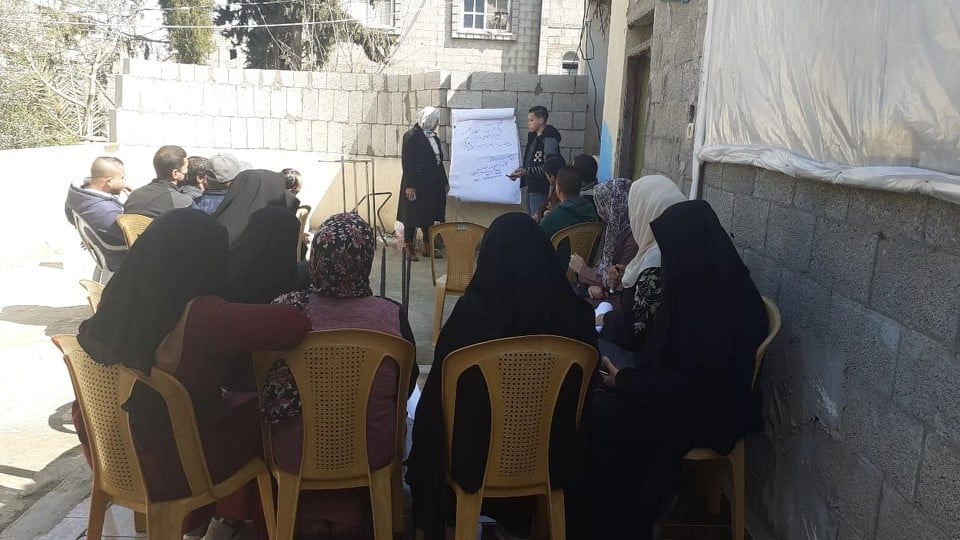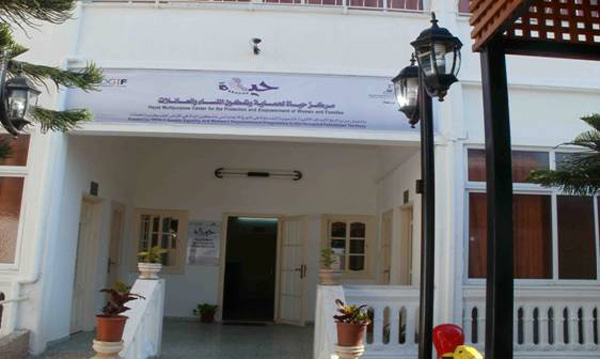
In early December 2011, as part of its project development initiatives, The Center for Women’s Legal Researches, Counselling and Protection (CWLRCP) inaugurated the “Hayat Center for the Protection and Empowerment of Women and Families.” This center aims to mitigate social problems and violence directed against women. The project is funded by the United Nations Women’s Fund and the United Nations Development Programme (UNDP) as part of their commitment to achieving the Millennium Development Goals, specifically promoting gender equality and women’s empowerment in the Palestinian territories, within the framework of Goal 1. UN Women provided technical expertise in women’s protection services and policies, while UNDP offered engineering expertise. Together, they supported the CWLRCP in establishing the multi-purpose “Hayat Center for the Protection and Empowerment of Women and Families” in the Gaza Strip.
Project Objectives:
The “Hayat Center for the Protection and Empowerment of Women and Families” focuses on addressing gender-based violence through an integrated, human rights-based approach. This includes prevention, by promoting a gender-sensitive culture and violence-free family relationships, as well as the protection and empowerment of women, girls, and children who are victims and survivors of violence.
The center also aims to serve as an effective tool for mobilizing the community to activate and coordinate resources and efforts to end violence against women in Palestinian society. It also seeks to support family relationships by strengthening supportive and protective bonds based on positive values such as care, love, appreciation of trust, and preservation of life.
Center Departments:
The “Family Forum” at the center hosts children in custody with one parent, accompanied by two family members, as per the Sharia court’s visitation order. This prevents these visitations from taking place at police stations.
This section provides daily social and psychological support and rehabilitation services to abused women, without requiring them to stay overnight.
This section defends women who seek legal assistance in family law cases and cases related to violence against women. The center provides free legal representation for them in court.
The “Hayat” center established a section to shelter threatened women within a dedicated program aimed at protecting them, resolving their family problems, and working to reintegrate them into the family.
However, this section is not currently operational, as per a decision by the Ministry of Social Affairs in Gaza.
Advisory Committee for the “Hayat” Center:
Given that the center will provide multiple services, it requires a diverse range of expertise to support a collaborative approach to service provision. It will also need advice and guidance from various organizations, such as the member organizations of the Amal Coalition, which have extensive experience in women’s empowerment, human rights, and community mobilization.
Recognizing that the “Amal Coalition to Combat Violence Against Women,” including its constituent organizations, plays an important and vital role in combating violence against women, a memorandum of understanding was documented between the CWLRCP and three organizations that are members of the Amal Coalition to Combat Violence Against Women: the Women’s Affairs Center, the Women’s Affairs Technical Committee, and the Palestinian Center for Democracy and Conflict Resolution. Based on this, the four organizations formed a temporary advisory committee to support the work of the Center for the Protection and Empowerment of Women and Families in the Gaza Strip throughout the duration of the contract signed between UN Women and the CWLRCP within the framework of the Millennium Development Goals.
Key Responsibilities of the Advisory Committee: