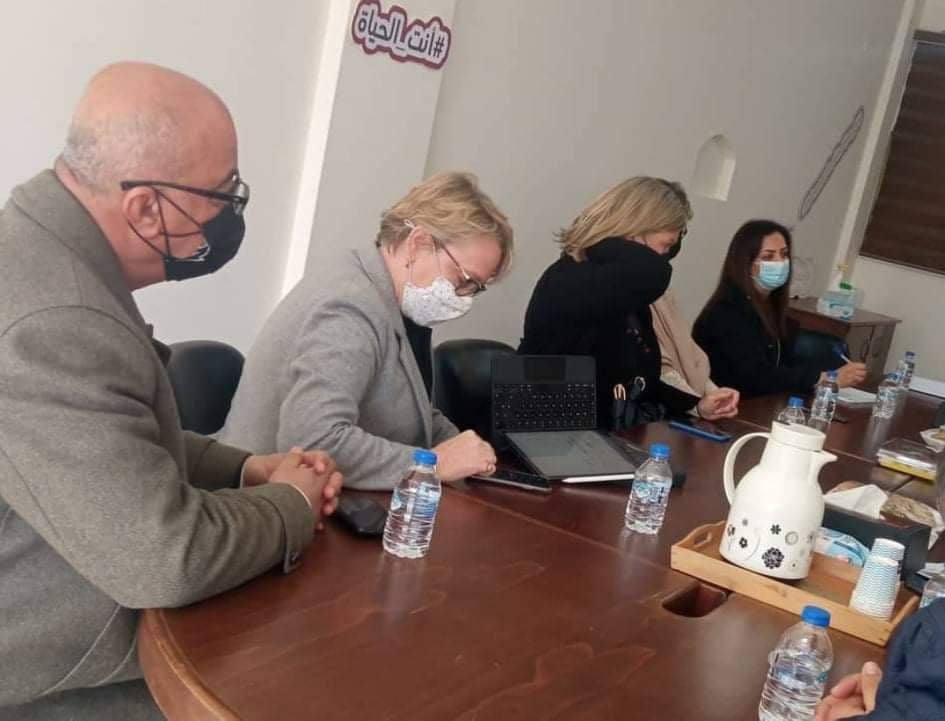
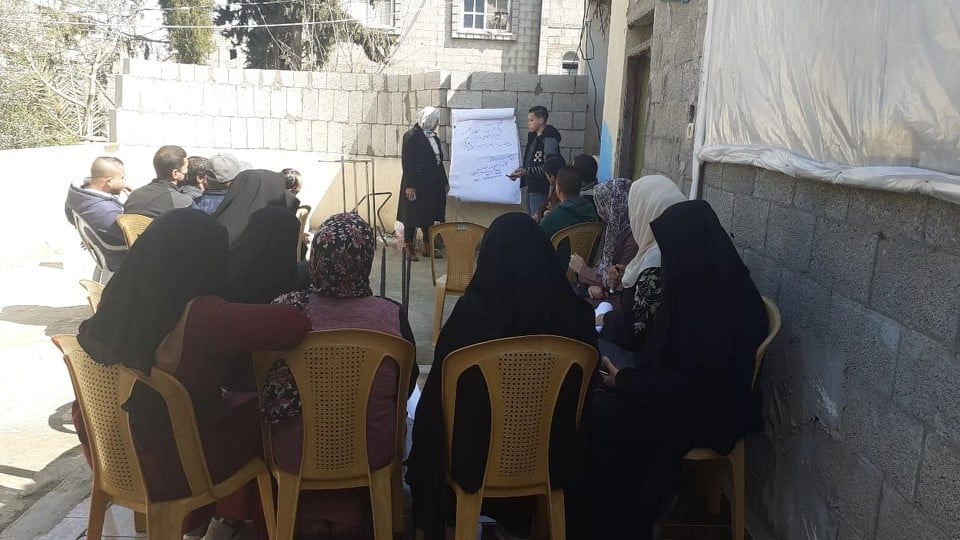
The Center for Women’s Legal Researches, Counselling and Protection (CWLRCP) inaugurated today a training course aimed at empowering duty bearers in the Sharia judiciary regarding issues of women subjected to violence. This initiative is part of the project “Improving Justice Sector Services for Women Subjected to Violence in the Gaza Strip.”
During the opening, His Eminence Sheikh Dr. Hassan Al-Joujou, Head of the Supreme Sharia Judiciary Council in Gaza, emphasized that women are a vulnerable segment of society and must be protected through legislation. He stated that this understanding has prompted the Sharia judiciary to prioritize providing protection for women subjected to violence, drawing upon practical experiences gained by women’s organizations, particularly the Center for Women’s Legal Researches, Counselling and Protection (CWLRCP).
He highlighted the need for continuous efforts to address legal gaps related to women’s issues, citing the current drafting of a bill on Sharia court procedures, which is expected to be finalized by the end of this month. He also mentioned several proposed amendments, such as raising the age of child custody, allowing adult women who do not require marriage authorization to marry under the guardianship of a judge, and authorizing disbursement from minors’ funds with the consent of the custodian. These measures, he said, are intended to provide protection for women subjected to violence.
For his part, Counselor Sami Al-Ashram, Dean of the Palestinian Higher Judicial Institute, spoke about the importance of these trainings and meetings in empowering duty bearers, enhancing their capabilities, and providing experiences for those working in the judiciary. He noted that knowledge of Sharia law comes through experiences and expertise, not just instruction, and expressed his continued aspiration for more local and international training to empower duty bearers, which he said is in the best interest of society.
In turn, Ms. Zainab Al-Ghoneimi, Director of the Center for Women’s Legal Researches, Counselling and Protection (CWLRCP), emphasized the importance of continued efforts to empower duty bearers in (the Sharia judiciary, the Public Prosecution, the Ministry of Health, and law enforcement agencies) in order to serve society in general and women subjected to violence in particular. She commended the ongoing cooperation between the Sharia judiciary and the Center, and the positive impact of this collaboration on the various services provided to women subjected to violence.
The training targets 42 employees of the Sharia judiciary, including Sharia judges, heads of registry, and employees of the Family Guidance Unit. They are divided into two groups. The first group, currently undergoing training, consists of 22 judges and heads of registry, receiving 24 training hours over 6 days. The second group, consisting of 20 employees of the Family Guidance Unit, will be trained immediately after the first group, receiving 25 training hours over 5 days.