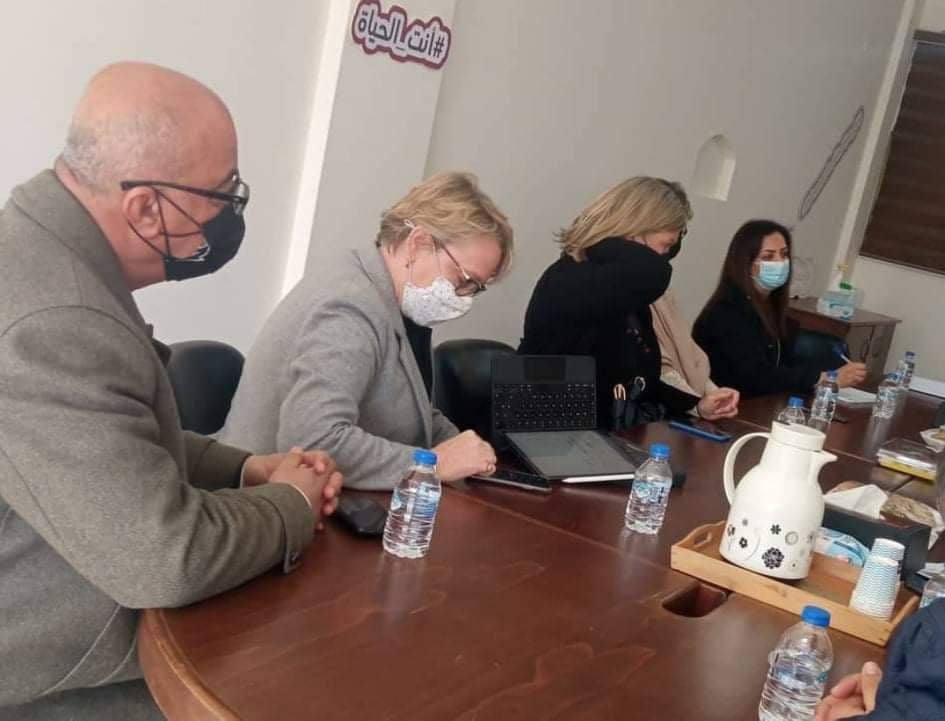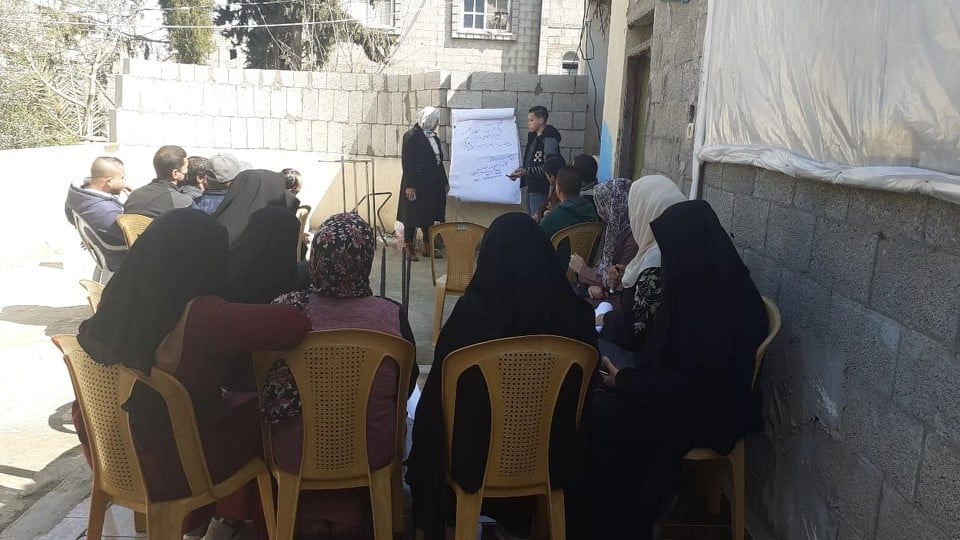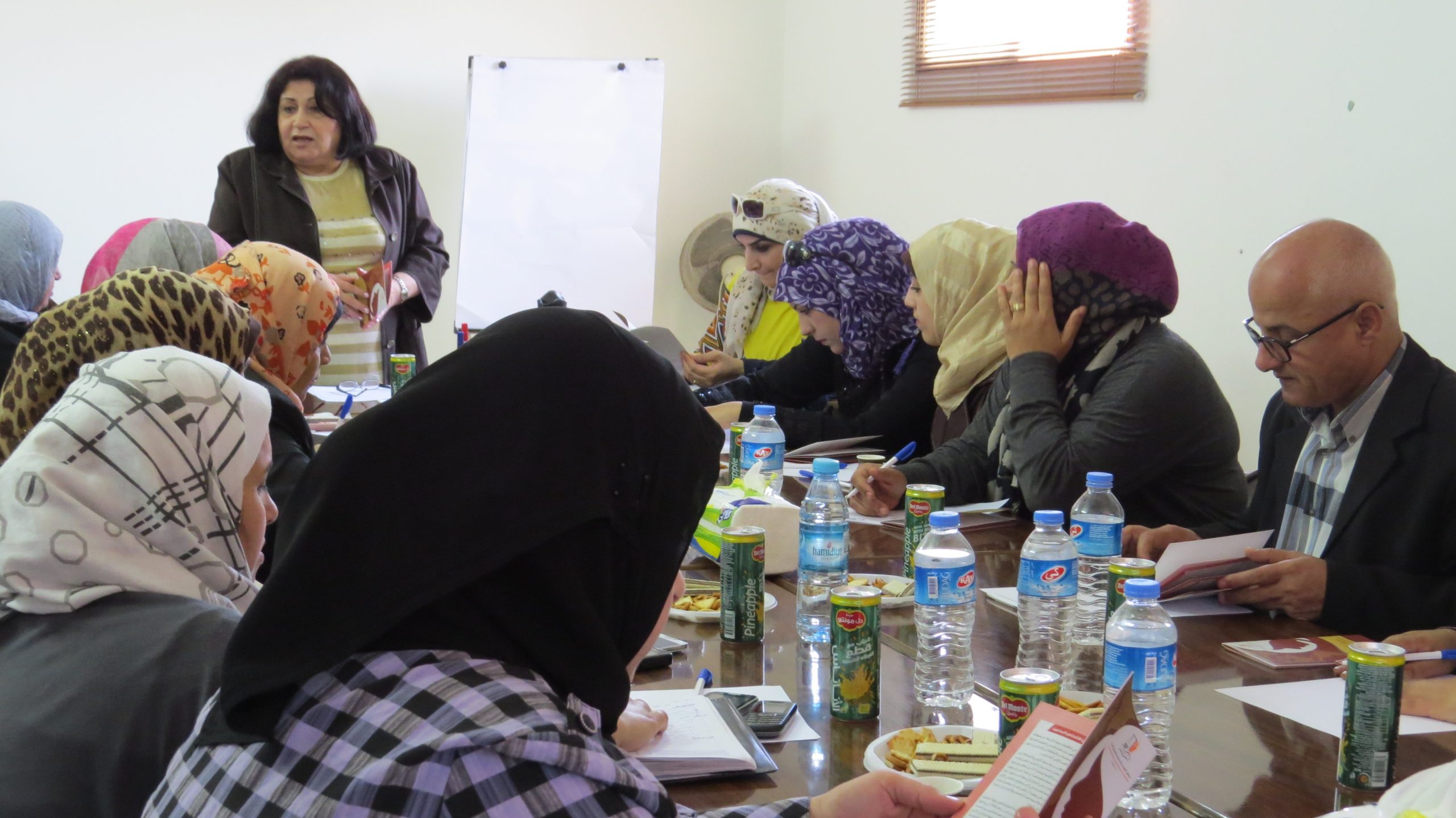
Under the heading “Coalition to Protect Women During Conflicts and Wars,” The Center for Women’s Legal Researches, Counselling and Protection (CWLRCP) invited leaders from women’s, community, and human rights organizations, as well as community figures from across the Gaza Strip. The inaugural meeting to form this coalition took place on Thursday, May 7, 2014. The formation of this coalition is part of the Human Rights and International Humanitarian Law Secretariat project, which aims to promote women’s rights and gender equality in the Gaza Strip based on human rights law and international humanitarian law.
Ms. Zeinab Al-Ghunaimi, Director of the Center, emphasized that the main goal of forming a coalition dedicated to protecting women during conflicts and wars is to unify efforts during the repeated military aggressions, given that the area is in a constant state of conflict with the Israeli occupation and its continuous aggression against the Palestinian people. The most recent example of this was the brutal aggression launched by Israeli occupation forces in the summer of 2014 on the Gaza Strip, which resulted in more deaths, injuries, and destruction.
She indicated that the Center, through the coalition, seeks to work locally within a team with various women’s, community, and human rights organizations in the five governorates of the Gaza Strip to provide better protective services to the largest possible number of civilians, especially women. Furthermore, the coalition will work internationally to expose the crimes of the occupation, reveal its violations, and prosecute it internationally to neutralize civilians during periods of war and conflict.
She explained that the Center believes in the necessity of participatory work alongside partner institutions and networks in the coalition to unite all efforts to protect women in particular, and children. She added that all partner institutions in the coalition will participate according to their specialization and capabilities, whether it is material or moral support, psychological or health support, or other forms of assistance.
Similarly, attendees presented many suggestions and recommendations for forming the coalition, which were discussed during the meeting, aiming to achieve all proposals that would contribute to the success of this coalition. They emphasized the necessity for the coalition to operate according to a successful plan due to its importance and necessity, and to avoid becoming just a repeated idea, as the Palestinian arena is full of many coalitions and alliances, some of which perform poorly, and some are merely ink on paper.
Al-Ghunaimi pointed out that clear goals and visions regarding the mechanisms of action will be developed and sent to all institutions that will agree to form the coalition, with the acceptance of amendment and addition to these goals and strategies by the participating institutions.