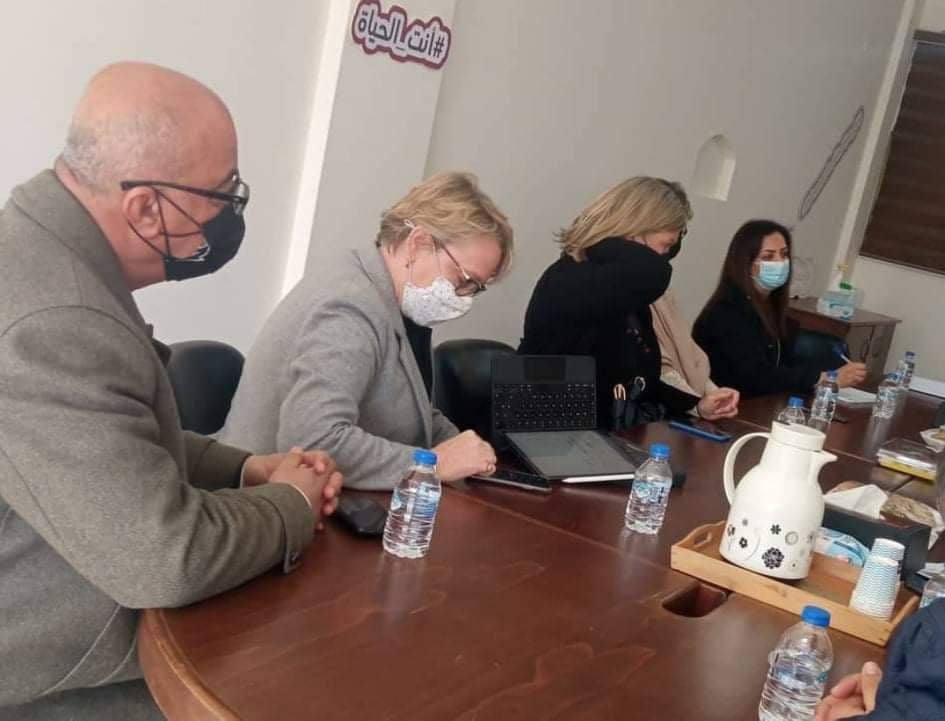
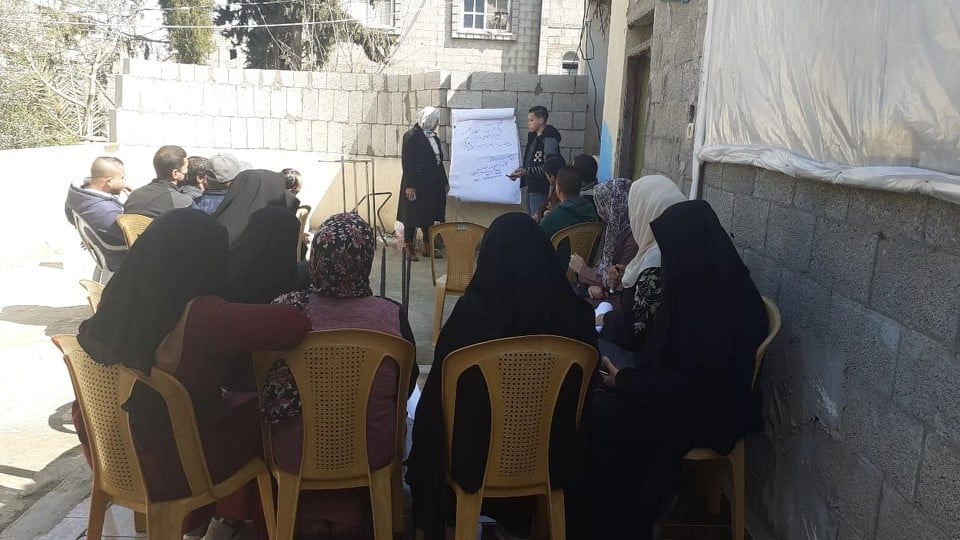
The Center for Women’s Legal Researches, Counselling and Protection (CWLRCP) concluded a training program for Sharia judges entitled “Empowering Duty-Bearers in Sharia Courts to Protect the Rights of Abused Women.” This initiative is part of the “Improving Justice Sector Services for Women in the Gaza Strip” project, which aims to develop and enhance the practical skills of service providers for abused women, based on human rights principles.
At the conclusion of the training for the two groups, the targeted participants, consisting of judges, executive directors, and heads of registry in Sharia courts across the five governorates of the Gaza Strip, were thanked. Certificates of completion were then distributed by Sheikh Hassan Al-Jojo, Head of the Sharia Judicial Council in Gaza, and the CWLRCP’s board of directors, represented by Ms. Islah Hasanieh, Chairperson, board members, and the Executive Director, Ms. Zeinab Al-Ghunaimi.
Sheikh Dr. Hassan Ali Al-Jojo, Head of the Supreme Sharia Judicial Council and President of the Supreme Sharia Court, delivered a closing speech emphasizing the importance of the Sharia judiciary as a component of the judicial authority and a cornerstone for protecting the social fabric of Palestinian society. He stated that the training course was held for Sharia judges, enforcement officers, and court directors. He also thanked the Center for Women’s Legal Researches, Counselling and Protection (CWLRCP) for its efforts in improving the skills and elevating the academic standing of Sharia judges and staff, as well as training court directors and enforcement officers to enhance their work within the Sharia judicial system. He also expressed his gratitude to the attendees for their participation and promised further courses.
Ms. Islah Hasanieh, Sheikh Saeed Abu Al-Jabin, Counselor Nafiz Al-Madhoun, Counselor Ziad Thabet, and Ms. Zeinab Al-Ghunaimi all emphasized the importance of cooperation with the Sharia judicial system to ensure justice for abused women and to protect families. They also underscored the importance of continued consultation among all relevant parties to exchange knowledge on mechanisms for women’s access to justice.
Ms. Wafaa Helles, the project coordinator, indicated that the training targeted a total of 40 Sharia court judges, heads of registry, and executive directors, who were divided into two groups:
Each group received 27 training hours, with 3 hours per day from 1:00 PM to 4:00 PM, resulting in a total of 54 training hours for both groups.
The training garnered significant interest from both groups regarding new topics, particularly those related to international agreements (especially CEDAW) and gender-based violence. Participants expressed their gratitude to the Center for conducting the two training courses, which they deemed successful in identifying challenges they face and proposing solutions.
The training included several recommendations for practical application in Sharia courts, including: