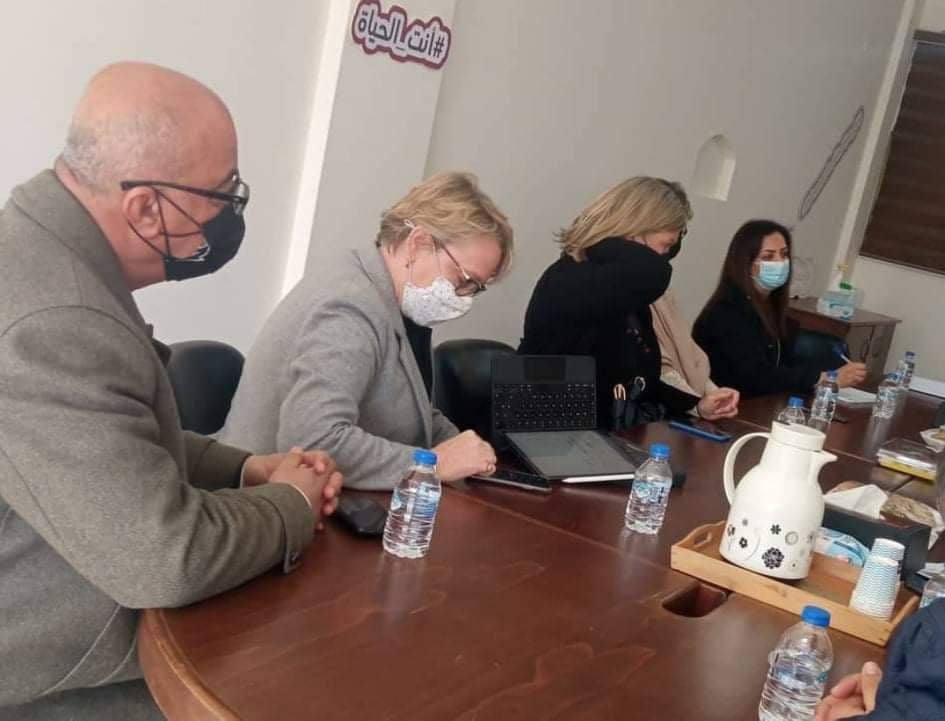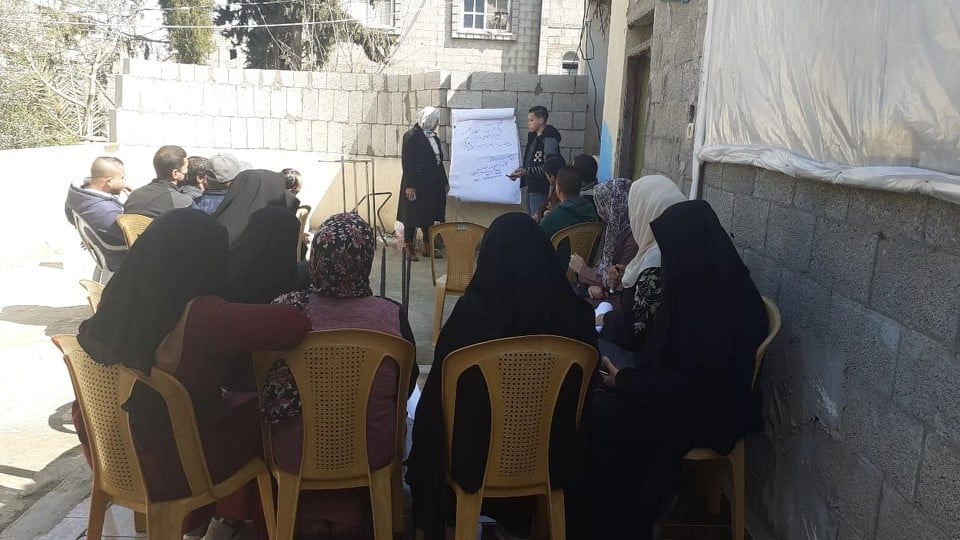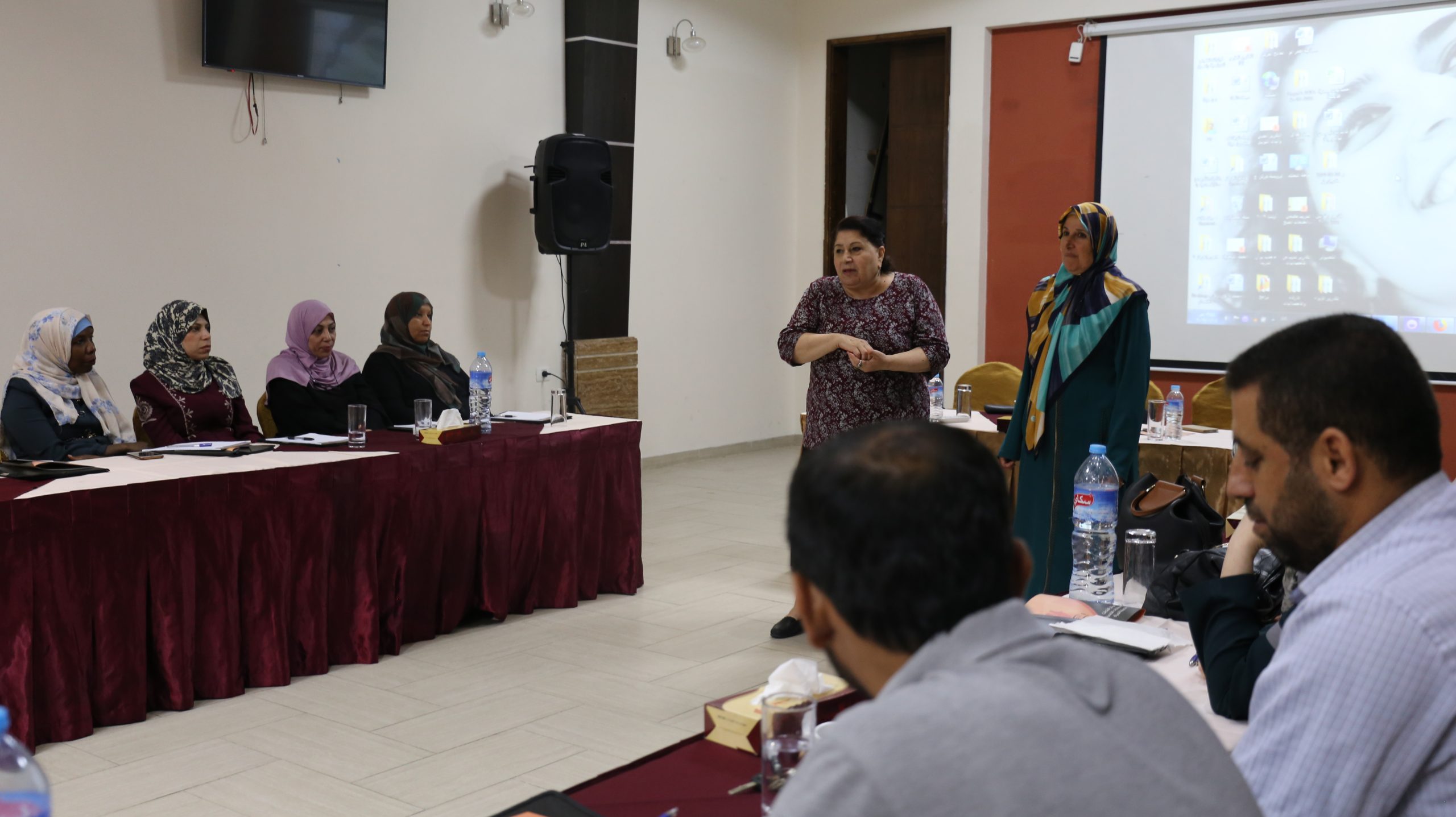
The Center for Women’s Legal Researches, Counselling and Protection (CWLRCP) has commenced training sessions for healthcare providers, entitled “Empowering Duty Bearers Among Healthcare Providers to Protect the Rights of Abused Women,” as part of the project “Improving Justice Sector Services for Abused Women in the Gaza Strip.”
Ms. Zeinab Al-Ghunaimi, Director of the Center, opened the first training session, welcoming the trainees from the Ministry of Health. She explained the work of the CWLRCP and the “Hayat” project for the protection and empowerment of women and families, which continuously strives to serve women victims of violence and provide them with comprehensive and integrated protection. She noted the importance of continuous joint cooperation with the Ministry of Health, especially after the Center successfully obtained the Ministry’s approval to exempt women victims of violence from comprehensive medical examination fees.
Dr. Sawsan Hammad, Director of the Women’s Health Department at the Ministry of Health, expressed her gratitude to the Center for its continuous cooperation with the Ministry, aimed at serving abused women. She spoke about the importance of this cooperation, which ensures the protection of the rights of women victims of violence.
Ms. Mariam Shaqoura, Director of the Jabalia Women’s Health Center, trained participants on the professional ethics for healthcare providers in dealing with abused women, and the essential skills and knowledge that service providers should possess.
Similarly, the project coordinator, Ms. Wafa Helles, indicated that a total of (65) employees of the Ministry of Health from the five governorates of the Gaza Strip are targeted. This includes all branches operating within the Ministry, whether from (medical investigation, primary care, ambulance and emergency units, nurses, administrators). The trainees are divided into two training groups. They will be trained on how to deal with cases of gender-based violence, how to prepare medical reports for cases of abused women, and the referral system. She clarified that the training will be implemented with a total of (30) training hours for the two groups, with (15) training hours for each group, over three days, with (5) training hours per day.