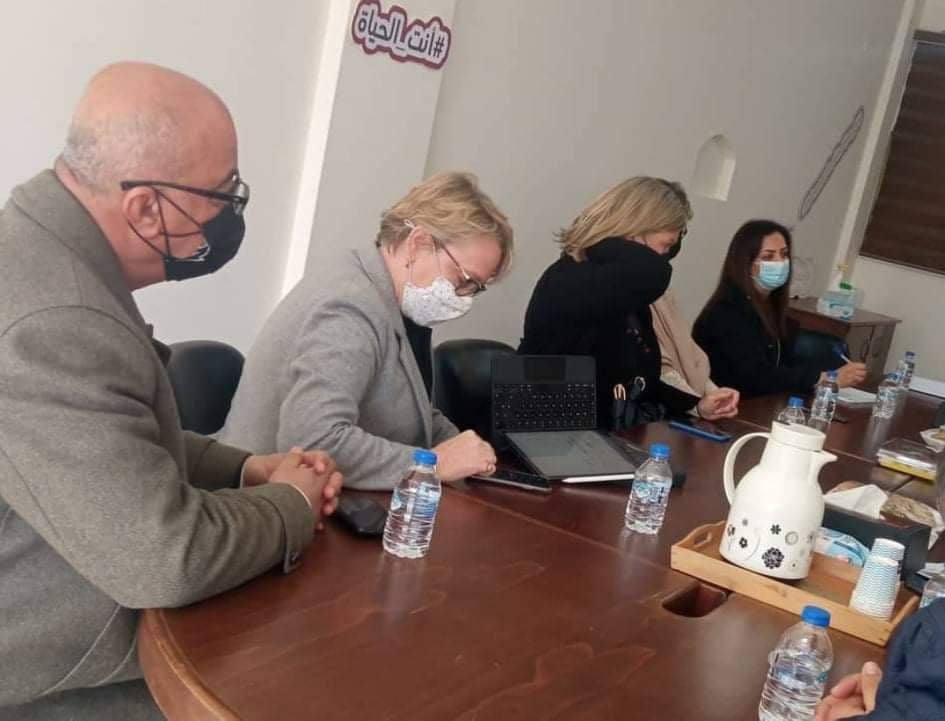
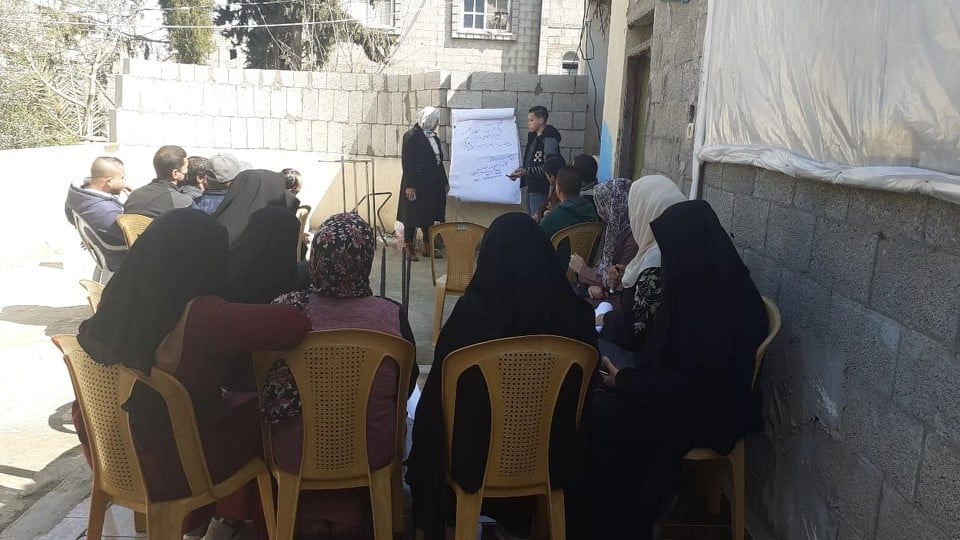
James Rawley, the United Nations Humanitarian Coordinator in Palestine, visited the “Hayat” Center project for the protection and empowerment of women and families, an initiative of The Center for Women’s Legal Researches, Counselling and Protection (CWLRCP), to learn about the services the center provides for the protection and empowerment of women in the Gaza Strip.
Ms. Zeinab Al-Ghunaimi, Director of the Center, welcomed the delegation, which included a number of United Nations staff, represented by James Rawley, Alexina, UN Women’s Protection and Gender Advisor, and Heba Al-Zayan, a UN program analyst.
Rawley expressed his admiration for the center and the services it provides to women and families, which alleviate the psychological pressures and social problems facing those families, especially in light of the increasing rates of violence in Palestinian society.
During her discussion with the delegation, Al-Ghunaimi reviewed the issues and problems facing the Gaza Strip, represented by the Israeli blockade and high rates of poverty and unemployment, which prevent the provision of simple daily life requirements. This forces young people to live in extended family homes, which facilitates parental interference in their lives and the emergence of problems that negatively affect the family.
She also touched on the laws applied in the Gaza Strip, including the Family Law and the Penal Code, which need to be changed to suit the developments of society and life in general, in a way that guarantees rights and protection for women. She pointed out the increase in social and legal problems facing women, especially after the recent Israeli aggression on the Gaza Strip, which displaced hundreds of families from their homes and opened shelters in UNRWA schools, which exacerbates the suffering of women.
The “Hayat” Center project was established as a multi-purpose center aimed at protecting women from gender-based violence in the Gaza Strip and empowering them to reintegrate into the family and society. It includes a number of sections: a social support section for abused women, a legal aid section, a “Family Forum” section for children in the custody of one parent to visit with the other, and a shelter section for abused and threatened women, which is currently not operational, pending a decision from the Council of Ministers to implement the safe centers system in the governorates of the Gaza Strip.