**The Center for Women’s Legal Researches, Counselling and Protection (CWLRCP) Concludes its Conference on the International Day for the Elimination of Violence Against Women**
To mark the International Day for the Elimination of Violence Against Women, The Center for Women’s Legal Researches, Counselling and Protection (CWLRCP) held its concluding conference entitled “Legal Protection for Women from Violence” as part of its legal assistance project for women in the Gaza Strip. The project is funded by the United Nations Development Programme (UNDP/PAPP).
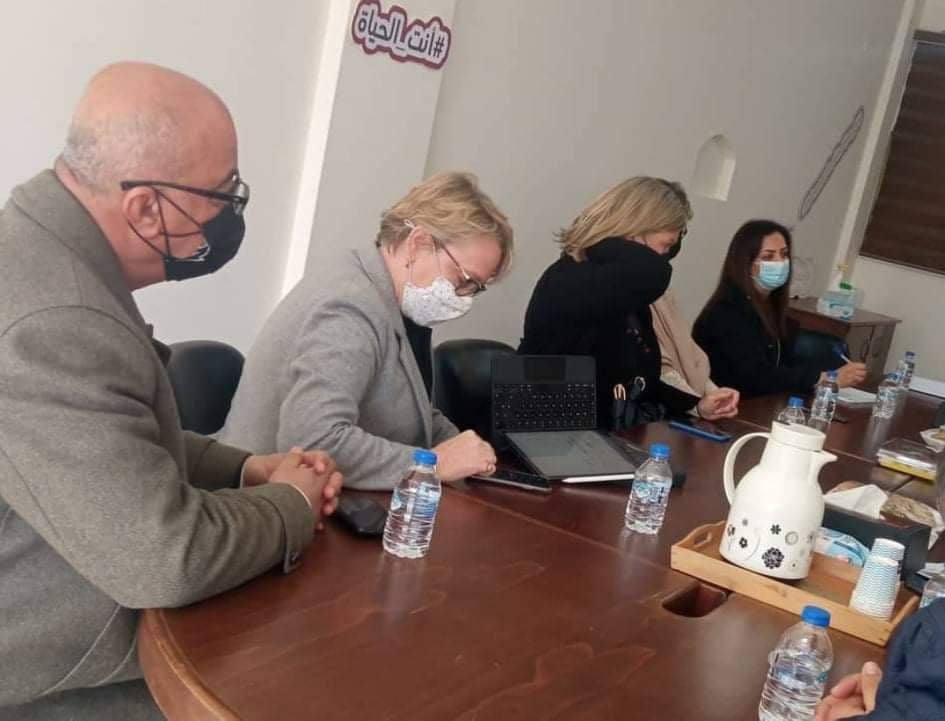
The meeting, held today at the Commodore Hotel, was attended by a number of directors of international, women’s, community, and human rights organizations, as well as community leaders, political figures, lawyers, and attorneys. Ms. Islah Hasaniyeh, a member of the CWLRCP’s board of directors, welcomed the attendees, stressing that the center’s primary goal since its inception has been to provide legal aid and support to women and protect them from all forms of violence. This is achieved through providing legal services to hundreds of women, offering free legal representation before the courts, especially in cases related to divorce and its consequences, child custody and alimony, as well as securing their financial rights through the execution departments.
Ms. Hasaniyeh presented the most important achievements made during the project, which include receiving (887) beneficiaries for direct and telephone legal consultations, (739) of whom were women and (148) of whom were men. In addition, there has been an increase in the number of cases received by the center’s counseling unit. While the project aimed to handle (50) cases during its entire duration, this number was exceeded during the first phase of the project, which lasted five months, bringing the total number of cases received by the unit and represented in Sharia and civil courts to (181) cases for (112) women who are divorced or subjected to violence, including (163) Sharia cases and (18) civil cases. She noted that verdicts were obtained in (150) cases for (88) women, and work is ongoing to follow up on (31) cases for (24) women. Legal mediation was provided to (35) women, leading to amicable solutions between the parties through legal intervention and the collection of alimony through The Center for Women’s Legal Researches, Counselling and Protection (CWLRCP).
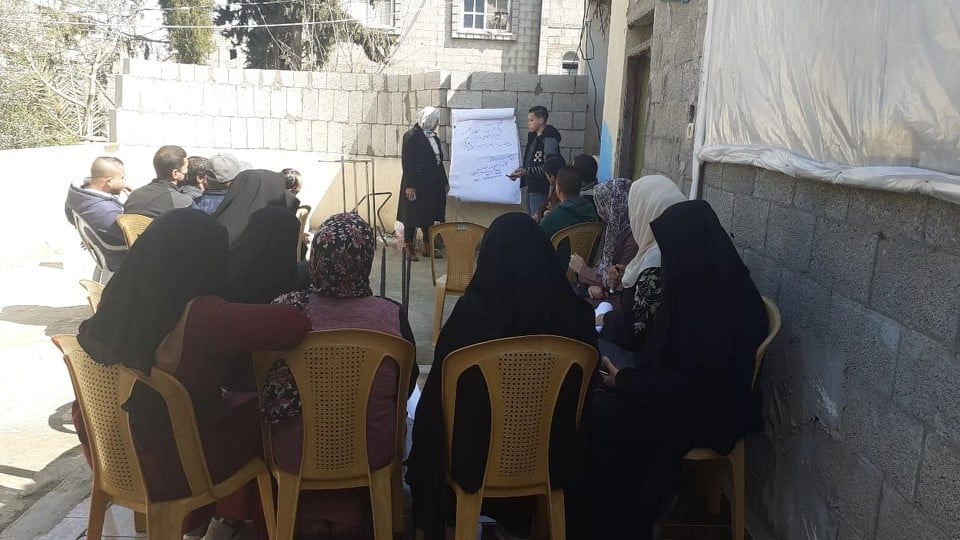
She added that legal intervention was made for (5) women by the Minister of Justice and the Chief Justice to obtain divorce and marriage approval, and judicial intervention was made for (80) divorced women with the Sharia Judicial Council in Ramallah and the Ministry of Finance to unfreeze their private funds, and work is still ongoing to solve the problem. In addition, (60) workshops were implemented in civil associations and institutions, benefiting (1879) people (1675 women and 204 men).
For his part, Mr. Ibrahim Abu Shamala, Deputy Director of the Rule of Law and Access to Justice Program – UNDP, affirmed that women in Palestinian society suffer from multiple legal problems as a result of historical discrimination and a condescending view towards them in general, which creates a defect in the system of relations and social roles, and causes an endless series of violations of their human dignity, psychological stability, economic independence, and ability to make decisions related to their lives. He pointed out that the biggest challenge lies in how to make the law work in favor of vulnerable groups, especially women, through working in the local environment in refugee camps, rural areas and slums, and that this is a necessary requirement for any sustainable development process that we seek to achieve in Palestine.
Legal researcher Mr. Karem Nashwan pointed out that violence against women is a global phenomenon that societies must intervene to eliminate and combat, because there is an evolution in the concept of violence to include assault on the body, human dignity, and assault on rights and duties. He added that the absence of guarantees in laws is a form of violence, explaining that Palestinian society suffers from comprehensive violence against women and men, as evidenced by the political division.
Similarly, Ms. Subhia Jumaa, Coordinator of the Complaints Unit at the Independent Commission for Human Rights, affirmed that despite the Basic Law’s emphasis on “equality” as a right that may not be violated, this has not been reflected in the legislative process, and that the Penal Code in force in the Gaza Strip and the West Bank both contain discrimination and do not fully define violence against women.
The conference was moderated by Ms. Fatima Al-Sharif, Legal Advisor at the Norwegian Refugee Council.