Injustice crept into Ahlam’s life since she was an innocent child who knew little beyond her schoolbooks and her long-haired doll. She was forced into marriage as a minor at the age of fourteen — a clear violation of the law banning the marriage of minors. She then gave birth to her first child, only to be stripped of her right to custody despite his very young age, as her short-lived marriage ended in divorce.
Ahlam got married again at the age of nineteen. Although her husband was fifteen years older and already had a wife and kids, she still felt happy with him and had three children with him.
Unfortunately, however, her happiness was not destined to continue as her husband was killed during the October 7th 2023 Israeli aggression on the Gaza Strip, forcing her to face life and try to cope with circumstances beyond her capacity.
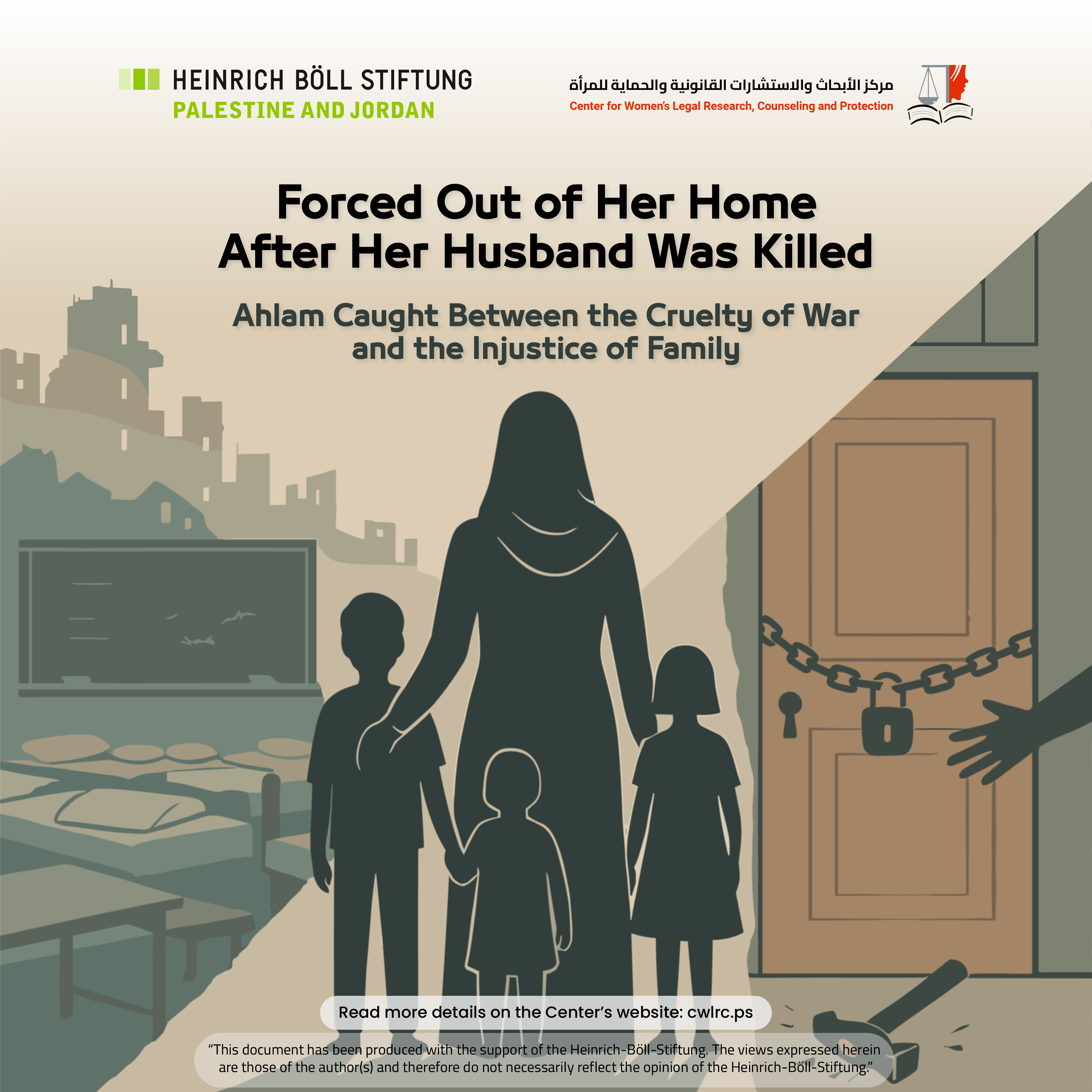
“I loved my husband so much, I swear I’d die for him,” Ahlam says. “When he was martyred, I stayed for two weeks with his other wife and her children — we were doing fine at first. But then my brother-in-law and my husband’s family began to stir up trouble day after day for me. They’d bring food into the house, but lock it away from me. One day, my kids were hungry and I couldn’t find anything to feed them. I had to bring a hammer and break the lock. My brother-in-law came in, yelling and insulting me. He then brought the neighborhood elder and relatives, accusing me of being the one at fault. Before we could even say anything, he accused me of talking to male strangers. The men started fighting, and I left the house to prevent worse from happening.”
It’s heartbreaking that Ahlam should be cast in suspicion just for being widowed and lonely, while in fact the house that shelters her and her children may be coveted by her husband’s family, or even her martyred husband’s salary, or what her children may receive in compensation or assistance, which helps her and them to endure. Ahlam continues to recount the details of her story: “I stayed with my family for two weeks, in the school they were displaced to. Then one day I got dressed, took my kids, and returned to my home, but my brother-in-law didn’t like that. He sent his wife and their daughter-in-law to drag me out.” Her eyes welled with tears of humiliation as she added: “I told them — fear God, you also have women and children.”
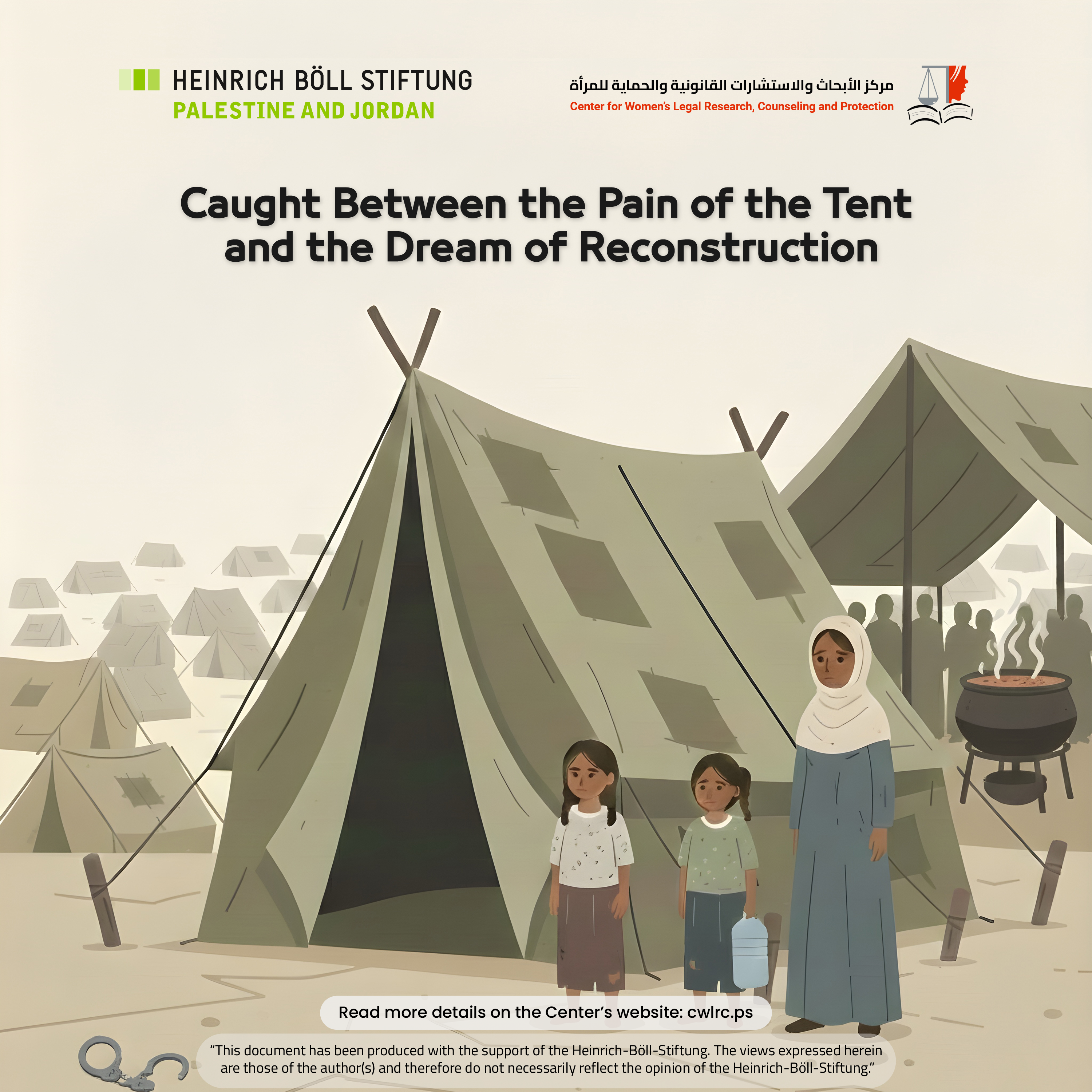
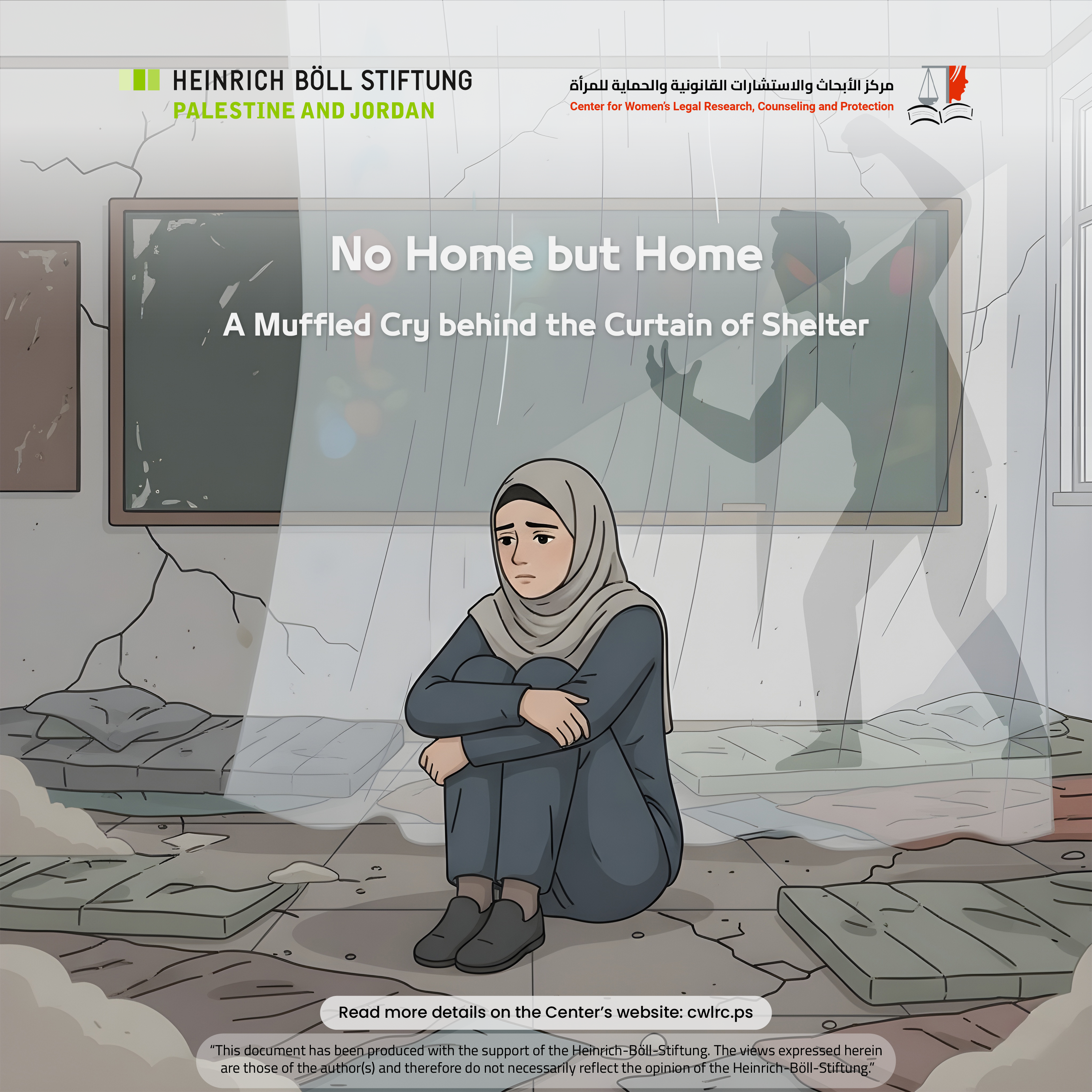
After living in her own home, Ahlam was forced again to move to a school shelter crowded with displaced people, where she barely managed to find a small space in a classroom shared by five families, and in a social environment that is both unhealthy and unsuitable for raising three children, the oldest of whom is nine and the youngest only two years old. So, she tried once again to return to her home.
“Life at the shelter is unbearable. When you want to go to the bathroom, you have to wait your turn. Everything we have is a hassle,” Ahlam says. “After a month, I returned to my house and thought ‘Whatever will be, will be.’ But my brother-in-law showed up again. His wife and daughter-in-law came to me downstairs and started yelling and insulting me. Then my husband’s first wife started hitting me and pulling me outside. I said to them, ‘What do you want from me? I just want to live in my house and raise my children.”
At that point, Ahlam broke down in tears: “They wouldn’t let me stay. I wish they had just killed me instead. I’m exhausted. I just want to go back and settle in my home with my children.” Despite this endless humiliation, Ahlam made one last desperate attempt to return home.
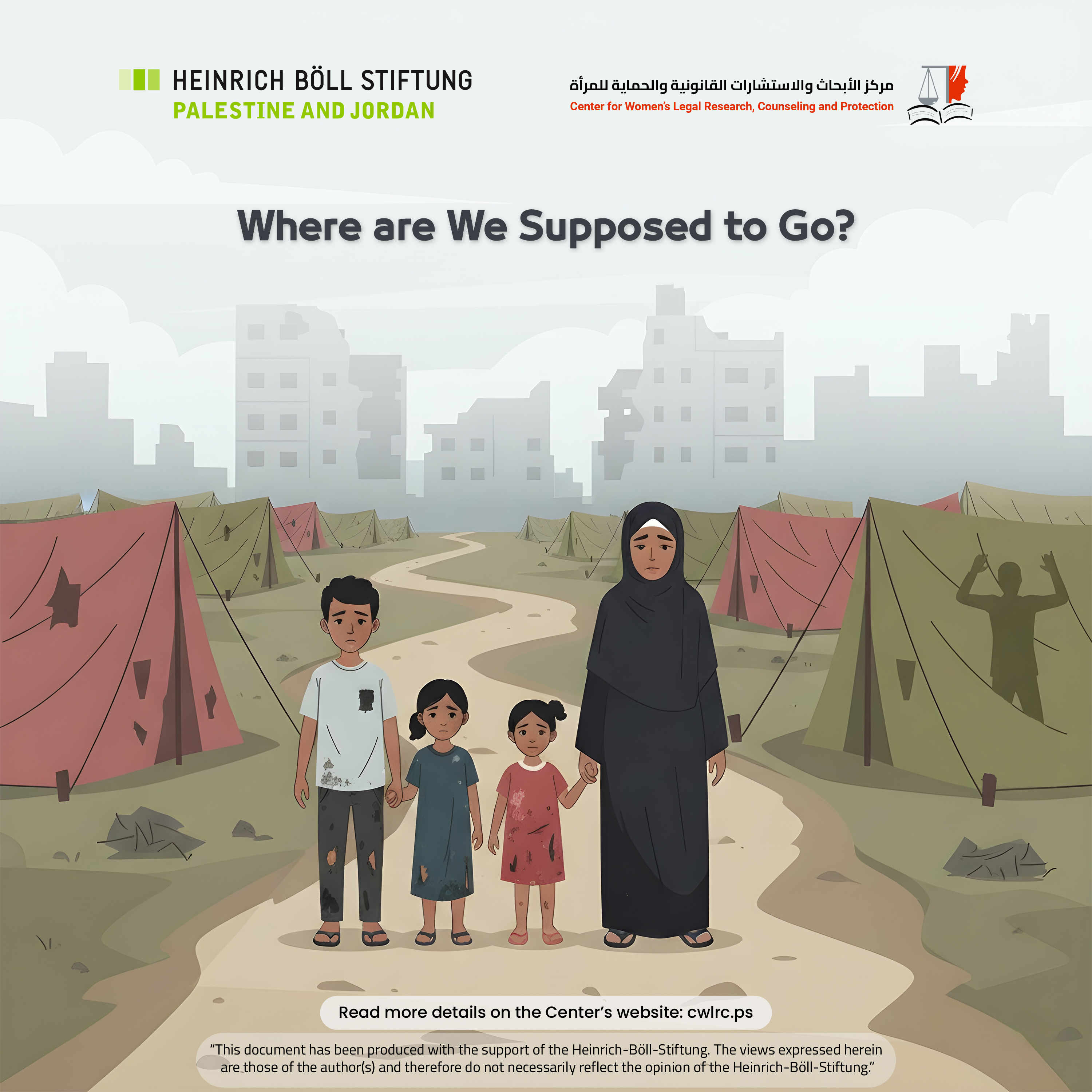
For a while, it seemed like Ahlam had succeeded in going back to settle in her home, until the day her brother was killed. Her husband’s family took advantage of her leaving the house to say goodbye to him to take over her home and kick her and her kids out for good. Ahlam says: “One day, I was at home preparing food for my children when my brother called me, breathing his last breaths. I ran out and left my house and my room open. They took advantage of the situation and entered my room, taking all of my husband’s belongings. I thought it didn’t matter, I already lost my dearest one, and I want nothing but my home and my children. I wish they had stopped there, but when I returned, I found them throwing my children and my belongings into the street. That means I was forcibly evicted from my home against my will. My husband is gone, and now they have come after me too.”
The reality created by the October 7th 2023 Israeli aggression on the Gaza Strip has rendered so many women like Ahlam, with no support, no protection, and no shelter. They are left to face the cruelty of the Israeli occupation as well as the injustice of the society, and even their own relatives — alone.
Ahlam’s story is not an individual tragedy, but a a testimony on how the violence of the aggression extends into societal violence that targets women. The reconstruction of Gaza goes beyond rebuilding stones; it is an opportunity to build a more just society that prioritizes the protection and needs of women like Ahlam. A true and sustainable recovery cannot be achieved without guaranteeing women’s right to shelter and safety, and empowering them to be essential partners in making the decisions of the future.
Disclaimer: The names used in the previous testimony are aliases.
“This document has been produced with the support of the Heinrich-Böll-Stiftung. The views expressed herein are those of the author(s) and therefore do not necessarily reflect the opinion of the Heinrich-Böll-Stiftung.”