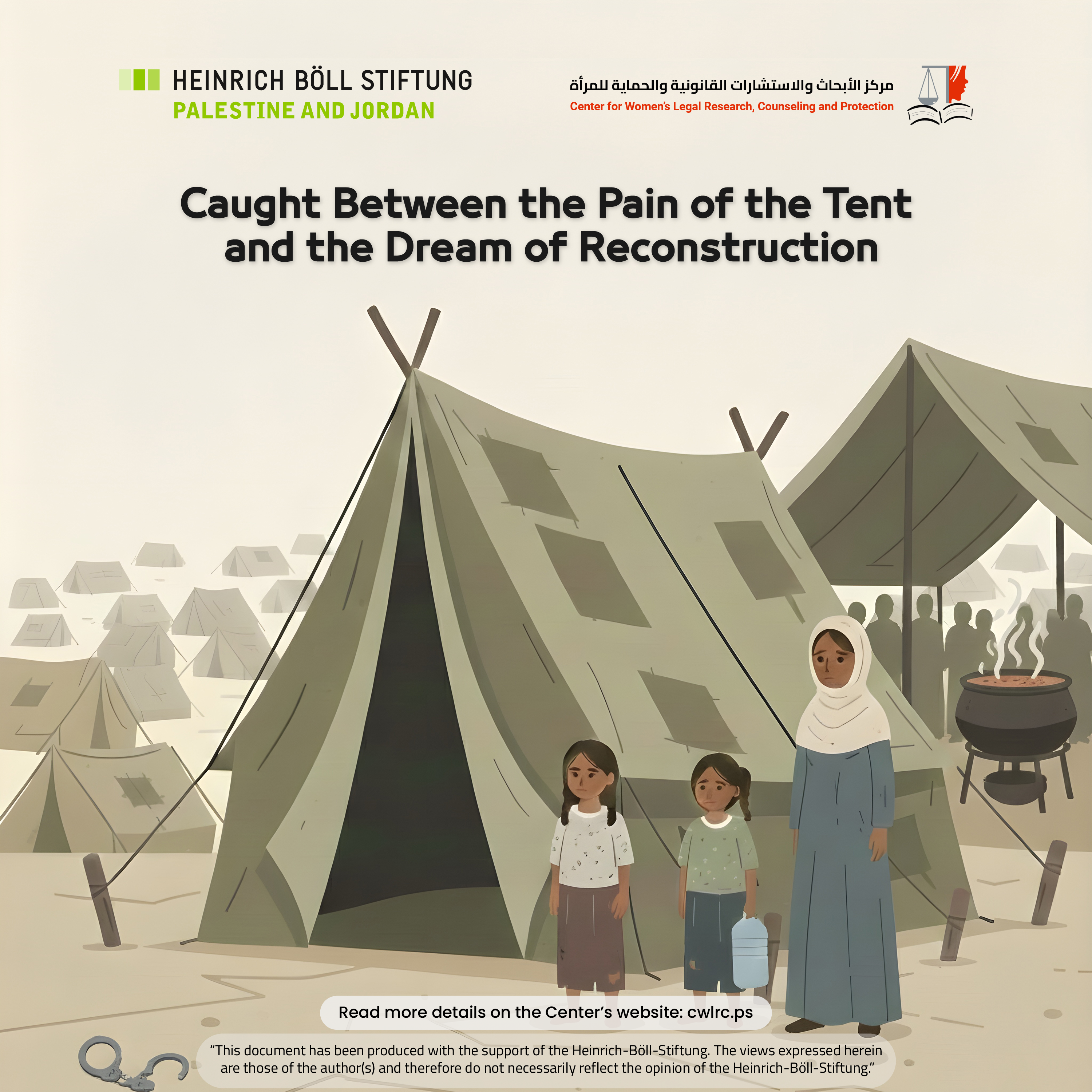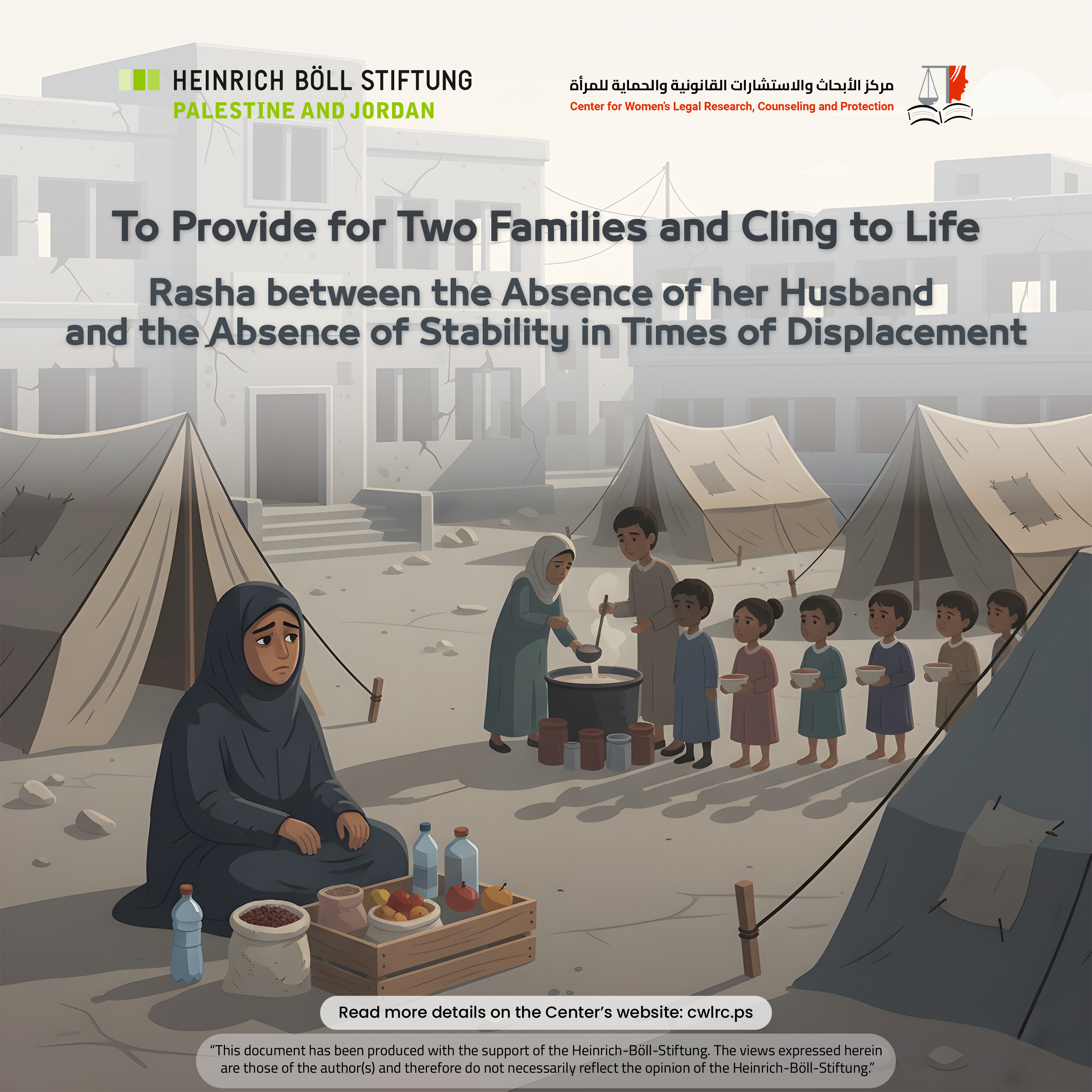
For years, Rasha has been waking up every morning to take care of the responsibilities of her household alone. Her husband had migrated abroad in search for job opportunities that would ensure stability and a better livelihood for his family. Rasha not only cares for her own children, but also for her husband’s children from a previous marriage—left behind by their mother when they were young—who became part of her responsibility amid the hardships of daily life, which multiplied with the outbreak of the October 7 2023 Israeli aggression on the Gaza Strip.
“I am the sole breadwinner for two families: my children and my husband’s children. My husband has been abroad for six years and I was living in a rented house. When the aggression began, my area was bombed and I had to flee and take the children to a safer place. I ended up in a school and have been living in a tent since,” Rasha says.
After fleeing her home and taking refuge in a tent in one of the schools-turned-shelters in Gaza City, she struggled tirelessly just that her children could fill their empty stomachs, in the absence of any income and the shortage of food as a result of the Israeli occupation’s closure of all commercial crossings. “I couldn’t provide for my children’s needs and was forced to set up a small stall because my husband wasn’t sending me anything. I don’t work, and he’s away. I owe people money that I can’t pay back and I’m scared.” Rasha explains her dilemma during displacement, and goes on: “I am the sole provider for my children. I tried to work and sell things, but the prices went up and I had no capital. Imagine when your child cries, asking for a single shekel ($0.30), and you don’t have it to give—it breaks your heart.”
She continues: “I am unable to provide my children with even the most basic of their rights. When my son keeps nagging for money, sometimes my brother takes pity on him and gives him something. My son even had to work for a man to only earn 5 shekels ($1.5). I wish I could feed my kids, give them meat, and bring home vegetables. We only see other people eating, but we can’t afford that.”
Her worries did not stop at her husband’s absence or the dire conditions of living in a shelter. After she was forced to flee her rented home due to continuous bombing, her landlord evicted her and demanded that she take all her belongings away. Rasha talks about her suffering: “At one point while I was displaced, my landlord called me and told me he wanted to stay at the apartment. After a while, I went back home to get clothes for the children, but I found the door locked with a chain, and his father refused to let me in, accusing me of not paying rent.”
She adds: “He gradually took over the house. When I went back, I found all my belongings in one room, some of them stolen. They searched through my things, and they even broke into my personal closet, searching for invoices that proved I had paid the rent and owed them nothing. Then they told people to tell me to come collect my furniture. But there are a total of six families living together—over thirty people—in the same classroom we are in at the school. Where am I supposed to put all my belongings, especially when I actually wanted to go back home?”
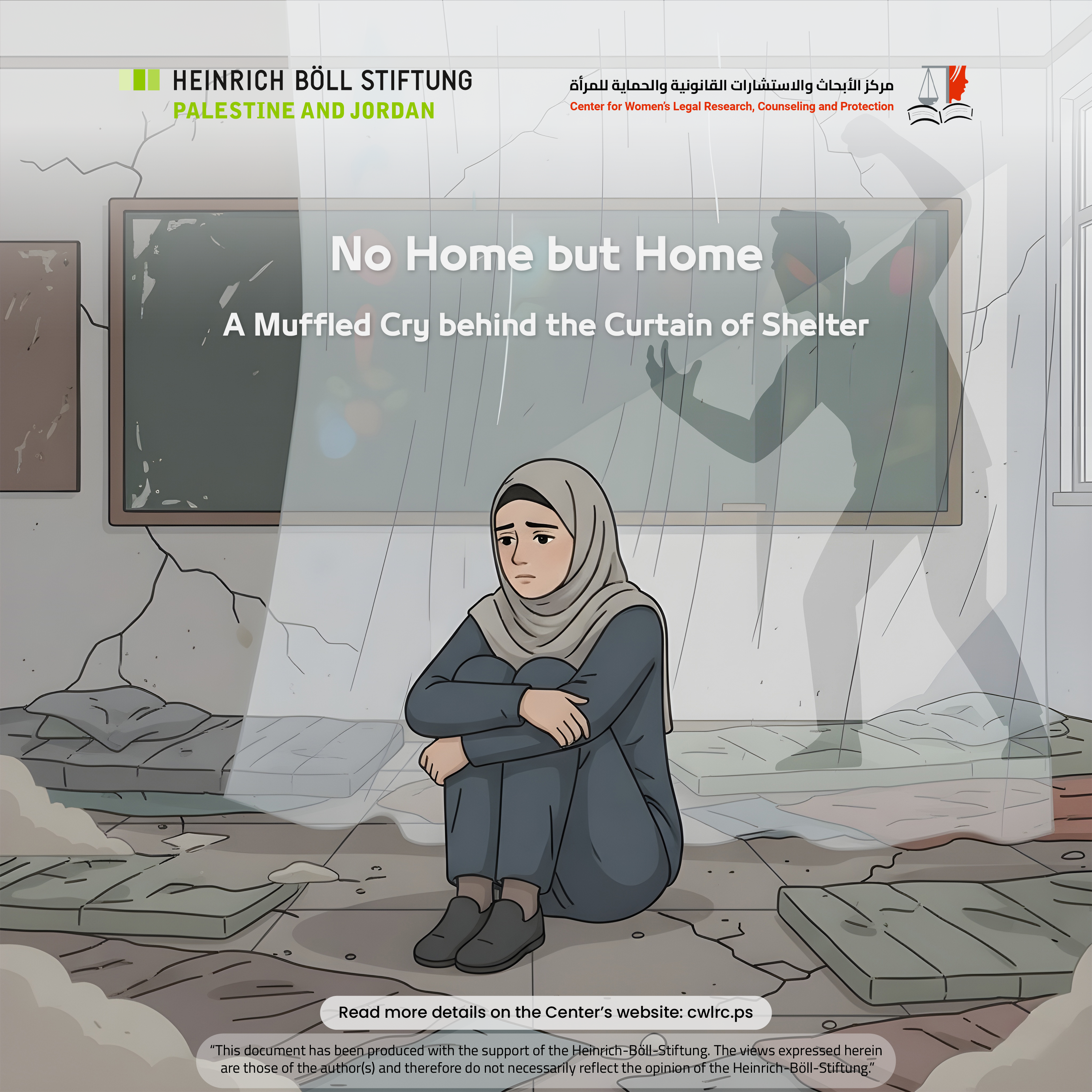
Due to the suffocating conditions, overcrowding, and the lack of privacy at the shelter, conflicts started erupting and escalating between Rasha and her other family members, to the point that she and her children were subjected to physical and verbal abuse. Rasha recounts: “The problems are non-stop with my family and my brothers. They beat my children and my husband’s son. Sometimes my son prays to die. Not only that, sometimes I even fight with my brothers and we even hit each other because of the kids or the food—they are the ones who buy it. However, my children often refuse to eat from it, as we are mainly living on what we can get from the soup kitchens. My children also feel deeply hurt to be treated this way.”
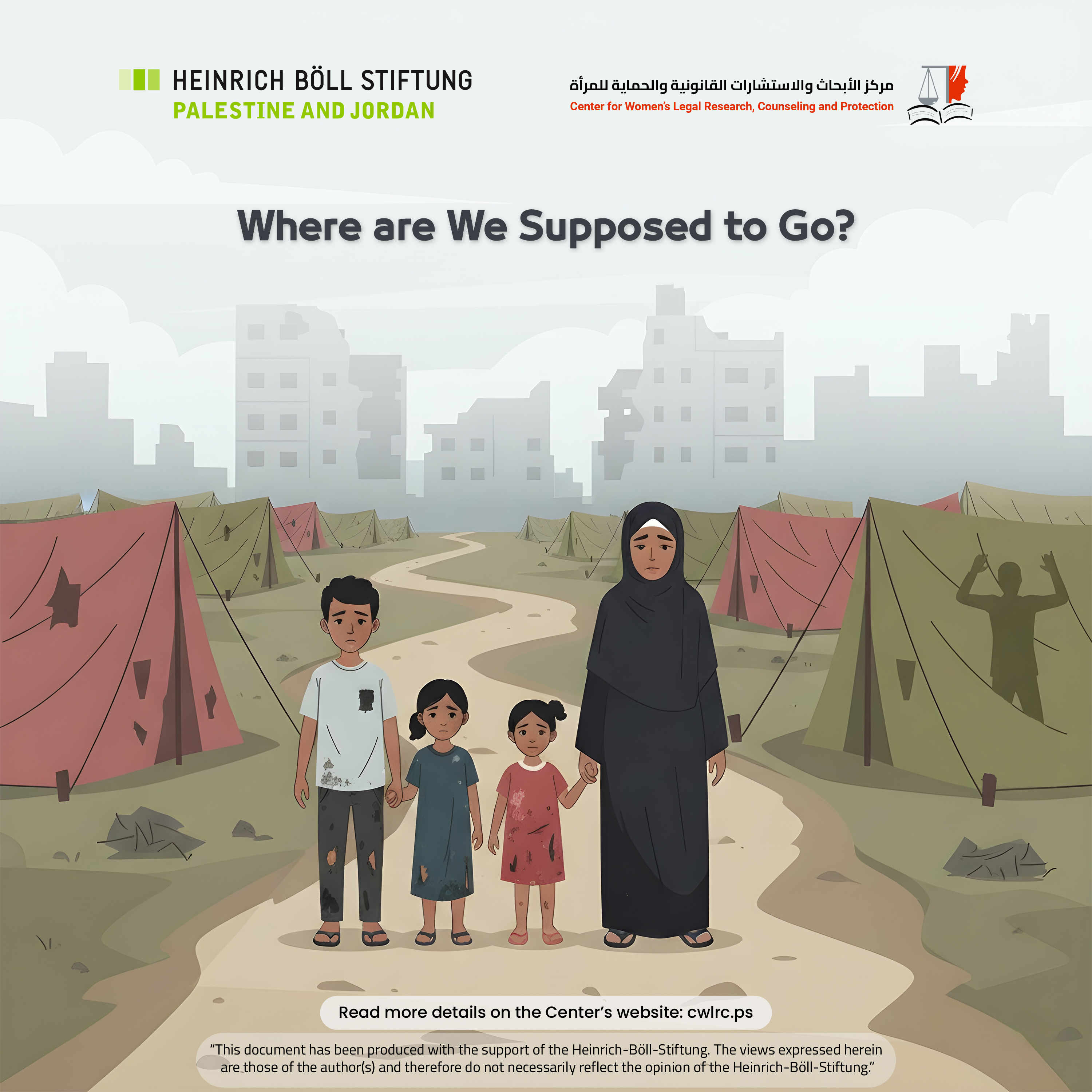
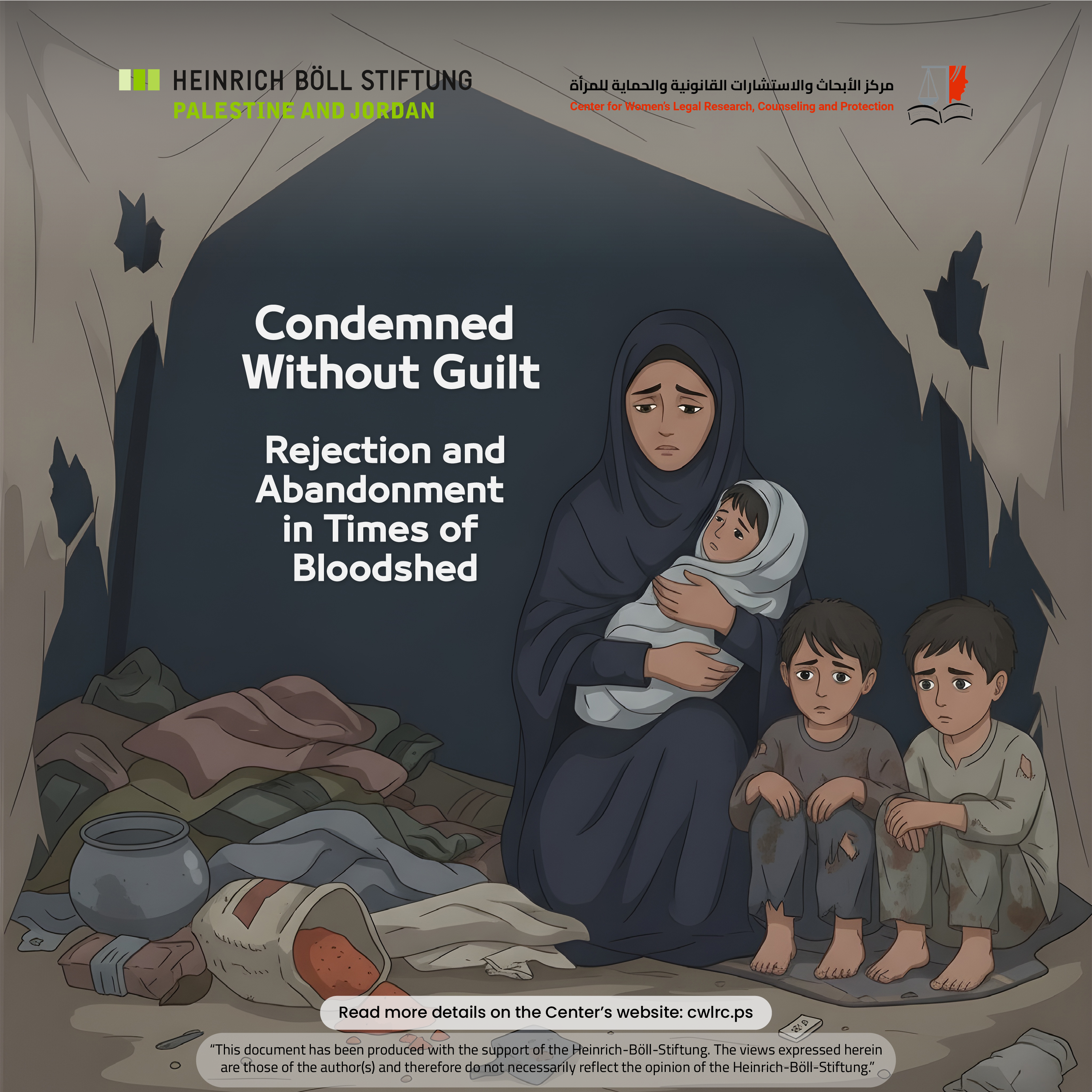
Amid all this, Rasha longs for safety, and that her husband can return for the family to be reunited, so that together they can secure a home where their children may live with dignity. Their life has turned into a daily struggle, deprived of the most basic necessities of life: food, water, shelter, and security. Rasha says: “I just want myself and my children to live in safety and stability. Right now, we have no home, no shelter, and we are scattered. Their father is in one country and we are in another, and we have no source of income. I’ve suffered so much. I just pray to God to reunite me and my children with my husband.”
Rasha dreams of reconstruction, and of Gaza’s return to a life governed by dignity and laws that protect her right to housing and beyond. She repeats her
wish: “All I want is a home of my own, to be reunited with my husband, and to live a decent life.”
Disclaimer: The names used in the previous testimony are aliases.
“This document has been produced with the support of the Heinrich-Böll-Stiftung. The views expressed herein are those of the author(s) and therefore do not necessarily reflect the opinion of the Heinrich-Böll-Stiftung.”