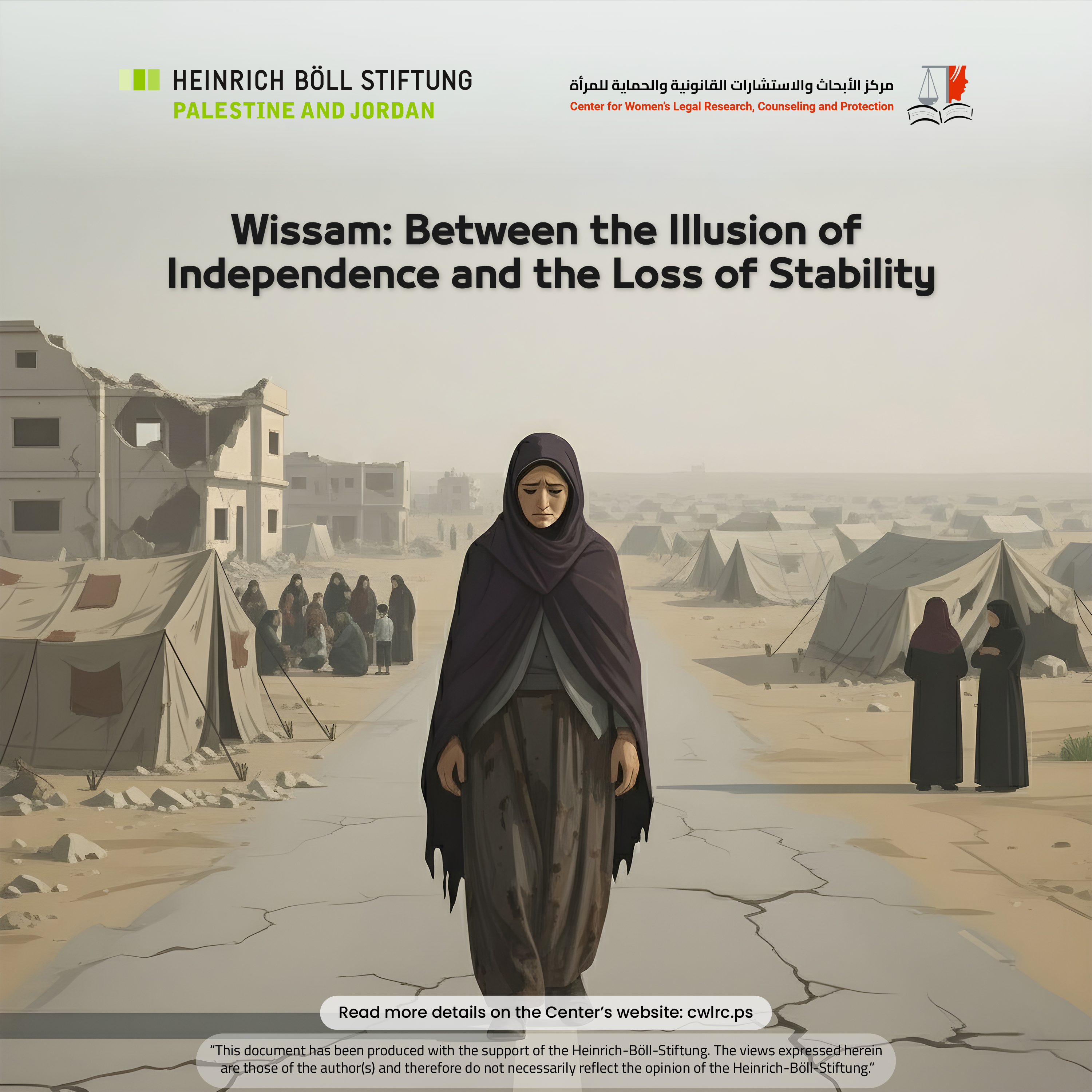
Within four walls, Wissam lived with her husband a life that fluctuated between disagreements and reconciliations. She thought of her small home as her fortress, despite the conflicts that filled it. However, the October 7th 2023 Israeli aggression on the Gaza Strip turned her life upside down and forced Wissam to flee with her husband’s family to a cramped tent, where even the most basic sense of privacy was absent, and daily friction turned into conflicts greater than she could bear.
“I had been married for a year and a half before the war, and my life wasn’t great, but I was getting by and taking care of my home, trying to resolve the conflicts between us calmly and without anyone from the family interfering,” Wissam says, “Even though his family was causing me problems, I chose to stay with him. I mean, my life was independent but not stable.”
She continues: “The Israeli aggression began, and by the fourth day I had to flee my house. We started moving around, staying with my husband’s sister once and his parents another time. Until then, there were no big problems. A week later, I got the news that my house was destroyed. That’s when I had a breakdown. I didn’t eat or drink for three days because I’m someone who treasures privacy, and I knew the saying: ‘Whoever leaves their home, loses their worth.’”
Wissam fled south with an exhausted body and spirit, seeking refuge, passing through the Israeli army checkpoint and the smell of death on the roads. However, what she encountered after arriving was no less harsh; she found herself under constant pressure in the house of her husband’s relatives. Wissam was forced to do exhausting work while enduring hurtful criticism. She recounts: “The days passed and we fled to his relatives’ house in the south. We crossed the checkpoint and the road was very difficult. We saw the bodies of martyrs on the ground, and children and adults crying. When we arrived, the whole family was gathered, and they started pressuring me to work—saying the more the daughter-in-law worked, the more her mother-in-law would like her. By the end of the day, my back felt like it was tearing apart from the exhaustion.”
From that moment on, the problems between Wissam and her in-laws grew and accumulated. She endured her suffering silently, not sharing what she was going through with her family, thinking that she would be able to solve these problems on her own, as she had done before. Until one day, Wissam had had enough, and she asked her husband that they move in with her family in Khan Yunis. Wissam recounts: “We went, but then my husband started making life miserable for me, making me feel like he had no privacy. He forced me to leave and go back to his family.”
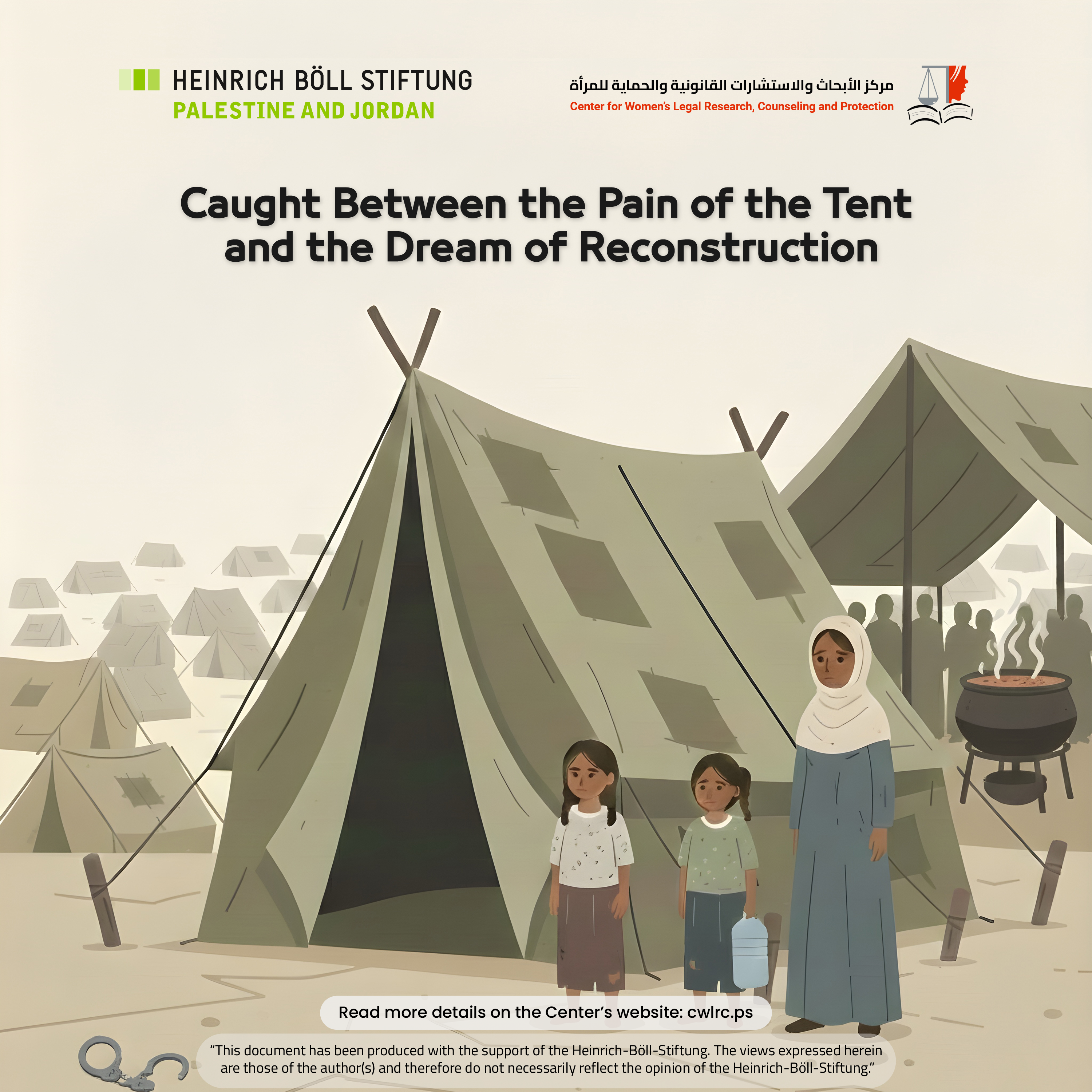
Wissam had no choice but to leave with her husband: “We left and stayed in a tent with his family, and God, what a miserable life that was. With the heat, the cold, lack of privacy, disturbances and constant noise. You couldn’t say two words in peace, you couldn’t go to the bathroom in peace. Even the light, we had to place it in such a way that it didn’t cast shadows. We feared the tarp might fall. Not to mention the diseases. I got sick in that tent, sicker than I had ever been in my life.”
She continues: “My husband refused to get me a tent of my own, and my brother-in-law stayed with us. So I had to stay 24 hours a day in my prayer clothes, terrified that even while asleep part of my body might show. I kept quiet for a while, but eventually I broke down and told my husband: That’s it, I can’t take it anymore. I want to leave.”
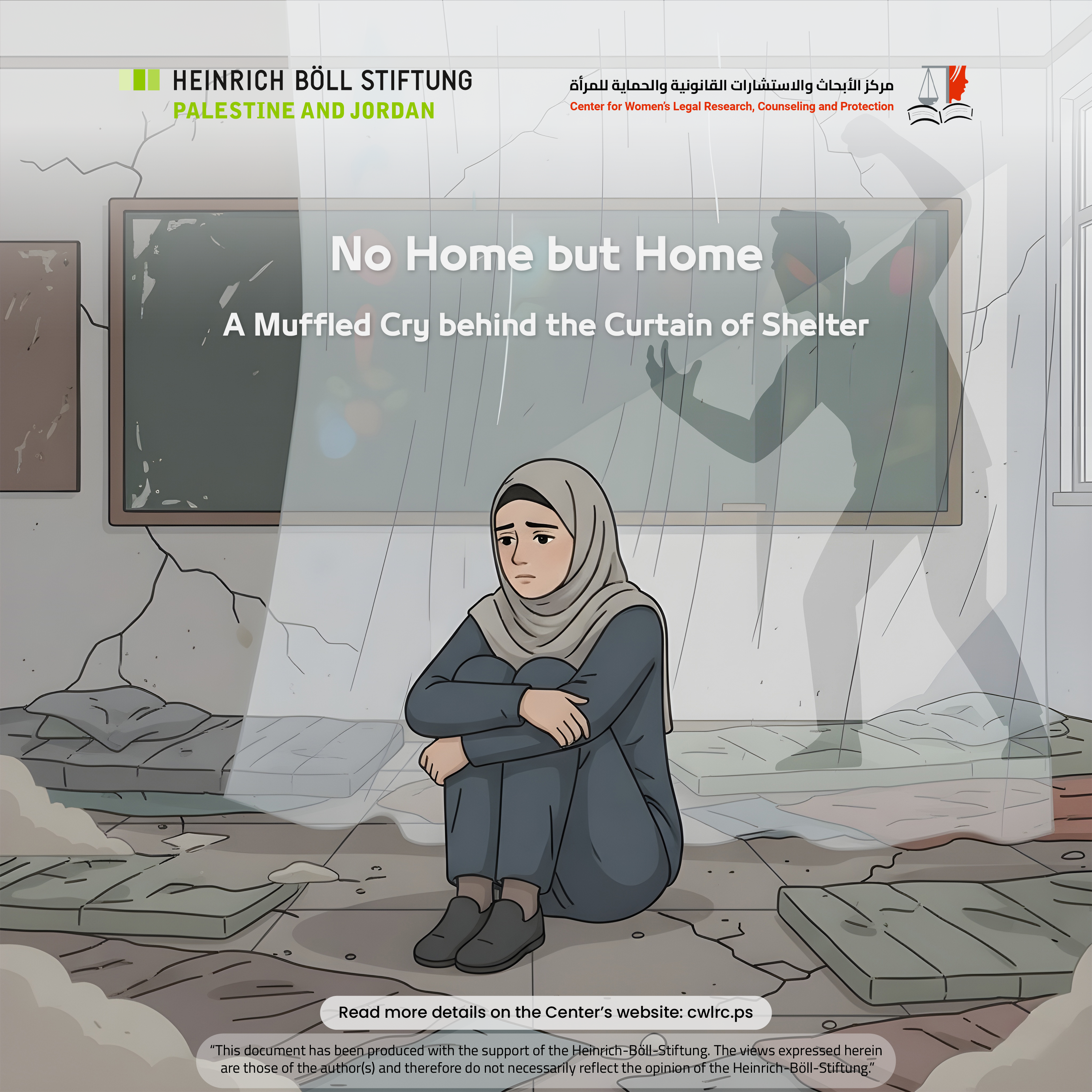
In a tent where her privacy was violated—no wall to guard her secrets, no curtain to shield her from others—Wissam was forced to remain in her prayer clothes the whole time. Despite all this, she was subjected to verbal harassment from her husband’s family, which made her feel unsafe and desperate to leave. “That’s when the incitement began, and they started to bug me and do everything they could to upset me,” Wissam explains. “I saw my life falling apart, and I tried to hold it together, but nothing worked. Then the (short-lived) truce came, and we returned north to his brother’s house, with the whole family cramming together under one roof, of course. They kept gossiping about me, making trouble, and pressuring me to have children.”
Amid the harsh conditions that Wissam experienced, her marital life was not immune to these pressures. The constant interference of her extended family caused her relationship with her husband to deteriorate rapidly, and she suddenly found herself not only stuck in a tent with no privacy, but also the victim of a sudden decision that ended her marriage without warning.
Wissam recounts: “I was so exhausted that I told my husband I wanted to go to my mother’s house for a couple of days. The first day, he didn’t check on me, and the next day he called me and said he was going to propose to another woman. At first, I thought he was joking, but then he repeated it, hung up and shut his cell phone. Once I heard that, I rushed back to his brother’s house. He (the husband) opened the door and started yelling at me. I didn’t understand what was going on. He said, ‘You don’t care about me, you can’t have children,’ and kept saying things that weren’t true. Finally, he got angry and said: ‘You’re divorced.’”
She adds: “I went to my family’s house and found out that he had gone to a lawyer and lied to him, giving him false information and telling him that I had agreed to the divorce. He issued divorce papers behind my back. I didn’t even know, and suddenly I was divorced. This means that my home has been destroyed, and many other homes will be destroyed because of this situation. Living in a tent is humiliating, and being displaced is humiliating. If I had a place to stay, this wouldn’t have happened.”
Without even the chance to defend herself, Wissam tries to comprehend what has happened, as if displacement has condemned her to lose twice—once when she lost her simple house, and again when she lost the home of her marriage—leaving her with an ending she never imagined, no matter the hardships she endured.
Wissam is one among many women who faced a similar fate, with their marriages ending abruptly, leaving them with violent consequences, amid the absence of housing and safety. As she and others warn, more women will face the same fate unless there are real solutions for reconstruction that help restore family ties and guarantee respect for women.
Disclaimer: The names used in the previous testimony are aliases.
“This document has been produced with the support of the Heinrich-Böll-Stiftung. The views expressed herein are those of the author(s) and therefore do not necessarily reflect the opinion of the Heinrich-Böll-Stiftung.”